Sat on a sprawling estate where rabbits, wild boar and roe deer frolick, the interiors of this country home fully embrace the pastoral aesthetic of its landscape.
Round Ceramic Bowl and and Spanish azulejo tile decorate the rustic kitchen in this 18th century Menorca house
A careful renovation has transformed this 150-year-old cowshed into a tranquil sanctuary just a few kilometers from the capital. New wings, done in the same style as the original structures, blend together with the old to create an expansive estate.
Antique furnishings captures glimmers of a bygone era in Castilla
The entryway features a large antique tapestry, a taste Spanish homes acquired from the Dutch during the Habsburg reign over the Low Countries. A small bargueño, the quintessential movable for any Spanish 17th century bureaucrat, sits on a wooden table. Ceramic pots used as a either a lamp base or vase complete the vignette.
Wood is one of the fundamental elements in the architecture and décor of the estate. Gable roofs made of briar wood show exposed beams above. A selection of rustic furniture, some in natural wood and showing its beautiful grain, offers a serene atmosphere in most rooms.
In the kitchen, the table and chairs painted in a Moorish green recall the Andalusian-Moroccan legacy baked into this culture.
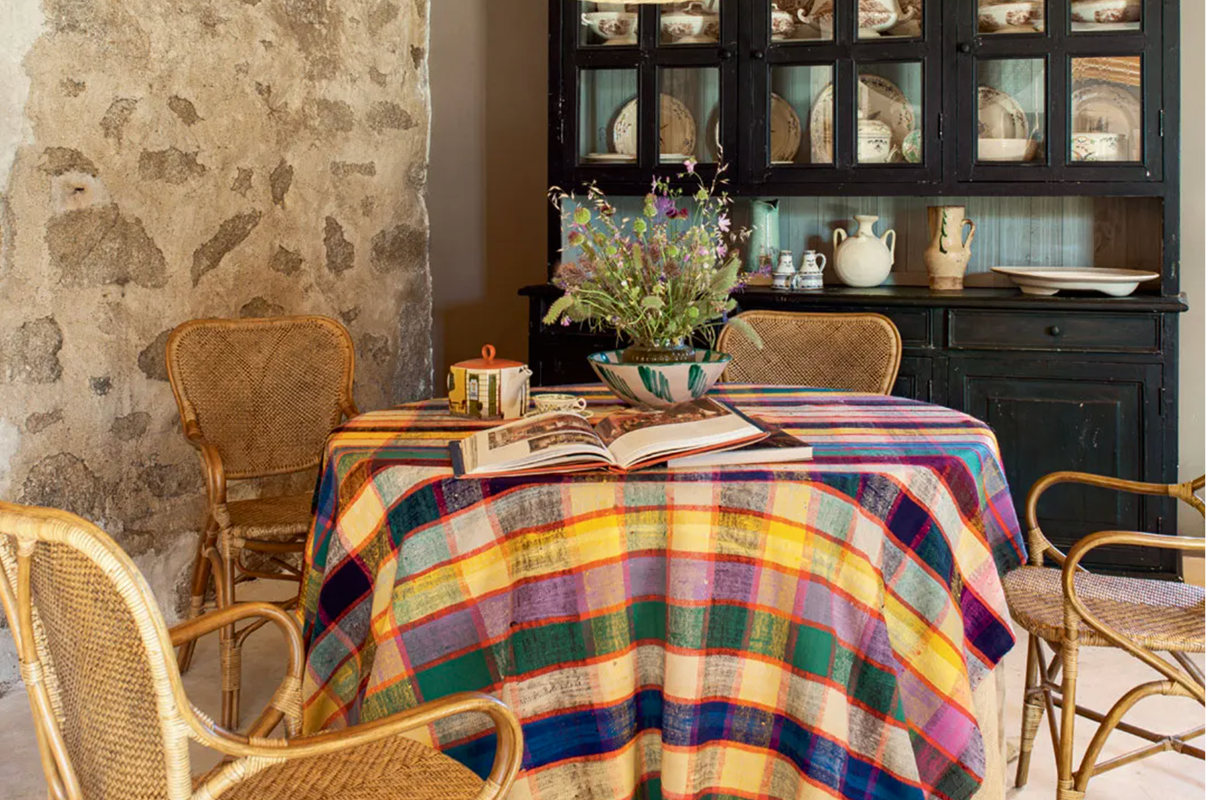
Decorative bowls and traditional botijos decorate this rustic breakfast corner
Antique furnishings, traditional pottery and vibrant textiles wraps the entire home in a warm, welcoming embrace. In the breakfast corner, a round table covered in various layers a la antigua reminds us of Grandmother’s bundled tabletops.
Wicker chairs with curvilinear arms invites us to recline and relax.
A cupboard made of recycled window frames filled with decorative ceramics from across Spain including plates, vases and botijos — the quintessential drinking jug of yesteryear. An essential item in the home and field to keep drinking water cool, this earthenware jug was once absolute necessity. Every region has a its own unique twist on the form and decorative styles abound.
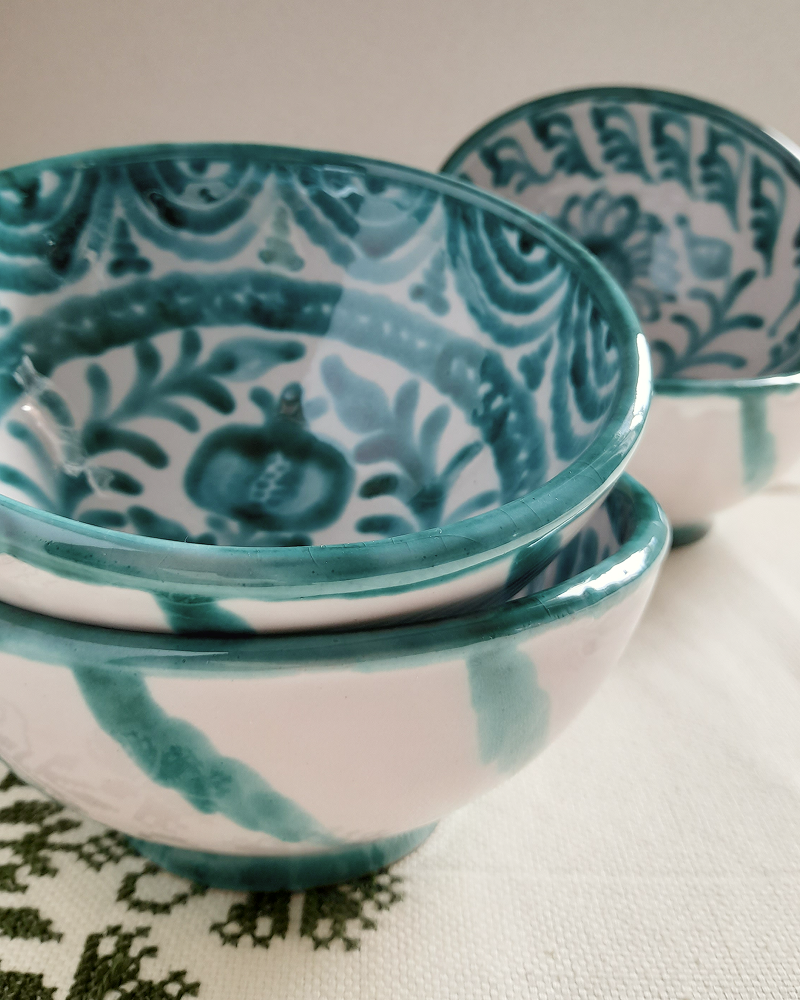
Speaking of style, a large round serving bowl, decorated inside and out, serves as the centerpiece on the table. Typical of the Fajalauza ceramics, this serving bowl features intricate motifs and geometric patterns.
Hand-painted in southern Spain, this lively pottery comes in various tones.
Elsewhere in this house, a large glass window lets the Mediterranean light into the sun room where a dining area sits eight. Amid olive and pine trees in the background, the gardens are teeming with rockrose, verbena, rosemary and thyme.
Perched on the wall is the region’s emblematic pottery. Instead of a static decorative motif, the scene tells a story.
Castilla’s polychromatic green series takes inspiration from Italian majolica, transposing landscape scenes worthy of the canvas onto ceramics.
A lebrillo or pitcher might feature human figures striding in the foreground, birds and quadrupeds frolicking among the trees under feathery clouds with small towns in the background. Though first made in the blue and white palette, the prolix use of green in the late 17th century came to define the style.
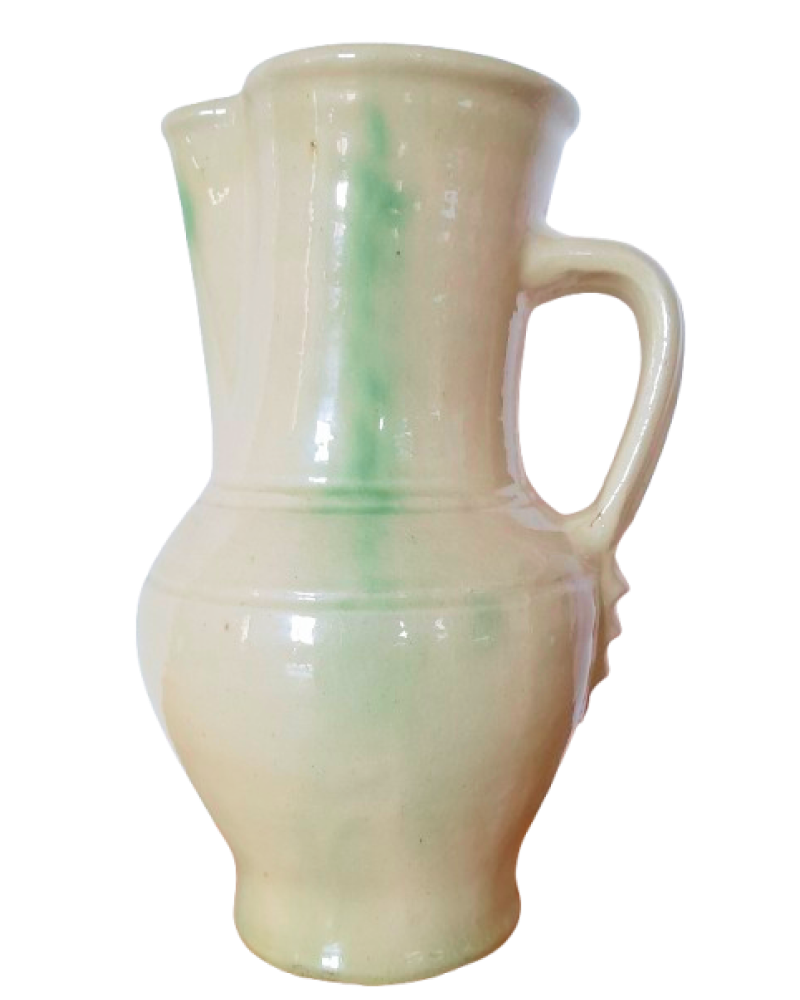
Handmade in Andalucía, this vase features a globular body that tapers to a round foot. Its long neck widens at the mouth. A trilobular spout and slender handle completes the silhouette.
Splash-painted on opaque yellow-tinted glaze, the green motifs decorate the belly and neck of the vase.
While known for its intricate patterns associated with the last Moorish empire, Andalusian potters also produce classical pottery that predates this period. In fact, the persistent use of copper green in ceramics comes from the pre-caliphate era when disjointed Muslim settlements still depended on the leadership seated in Damascus.
This style of pottery was inspired by green and black pottery that the Abbasid produced throughout the 9th century to imitate Chinese stoneware.
The hint of yellow in the glaze gives this vase a rustic vintage finish. Perfect for the prettiest Sunday flowers.
This vase is also available with the splatter motif.
Dimensions: 23.5 cm x 12cm | 7.9 in x 5.1 in, 1L or 35 oz
Care: Dishwasher safe

This classic Castilian lebrillo features a whirlpool or “remolino” of flowers and wispy branches done in the traditional palette where green dominates.
This decorative bowl bears the marks of its provenance. The ridges along the body of the lebrillo testify to the rotation of the wheel while a clear glaze reveals the fine grain of the sandy clay beneath — both unique characteristics of old Castilian pottery.
Though this bowl features lively accents in blue and honey-yellow, time has softened its patina and given it a lovely finish.
Once an indispensable household item, the lebrillo has become one of the hallmarks of decorative Spanish pottery.
Dimensions: 34 cm in diameter
Hanging your decorative plate: A small incision in the foot of the plate allows for hanging. Our heavier items like lebrillos require a wall mount.
Kindly Note: Small chips and discolouration are part of the charm of handmade antique and vintage pottery. For questions or specific sourcing requests, please get in touch.
This classic Castilla country home turned weekend bolthole, showcases the region’s traditional sober architecture. Functional and well-suited to the climate, the house has maintained its original stone walls, providing essential thermal insulation in this land of contrasts.
Cold winters here drew bitter tears from the Andalusian poet Antonio Machado — so much so that he dedicated various verses to its harshness.
But, Castilla is also a land where the estival heat of July and August feed the vines and olives, pulls the most vivid crismon out of saffron blooms and turns September into a festive harvest.
For more lebrillo designs, custom size or color, please get in touch.
