
Hand-painted Ceramic Tiles
Authentic and traditional ceramic decorative tiles showcasing the rich heritage of Spanish craftsmanship.
Traditional Hand-painted Ceramic Tiles
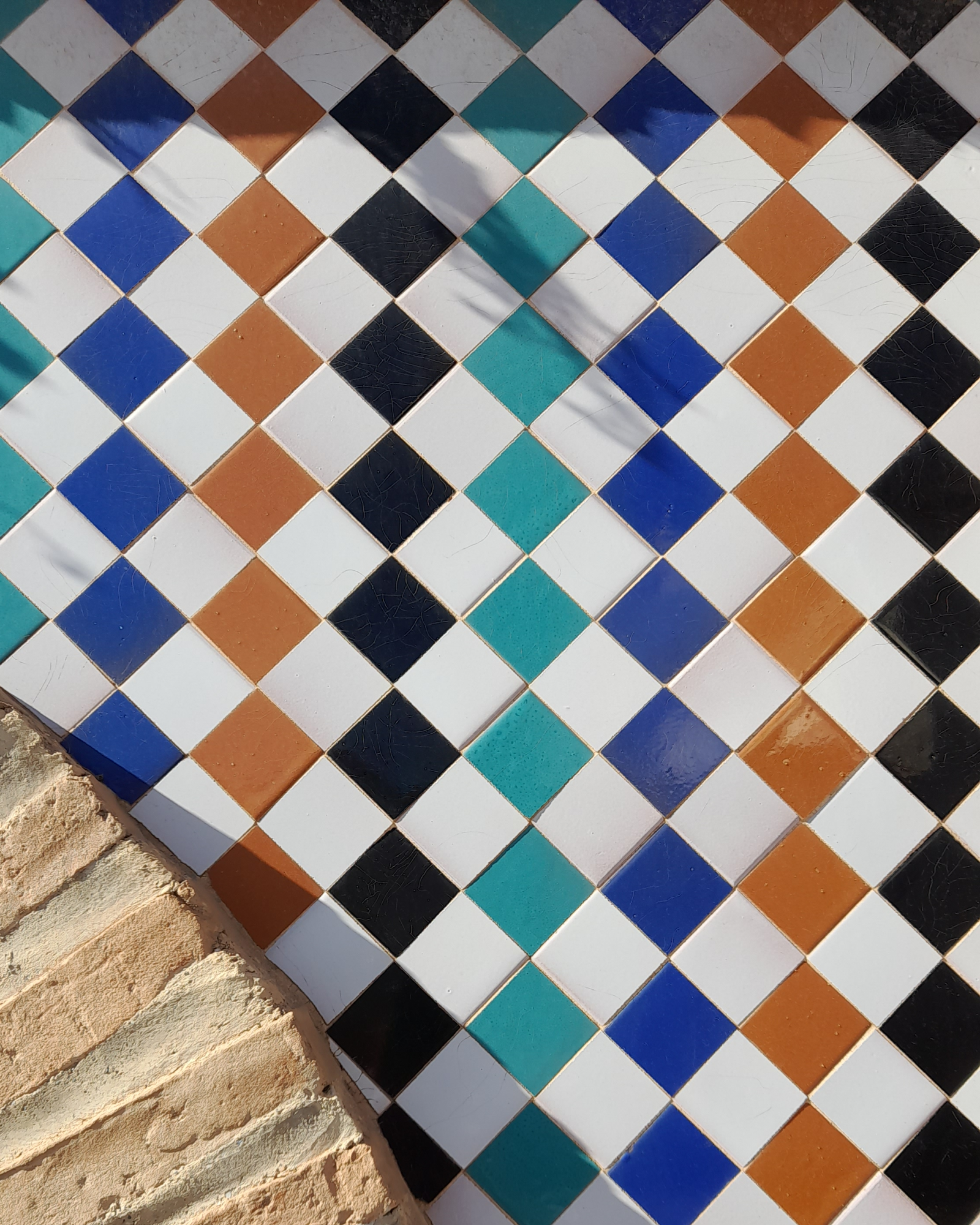
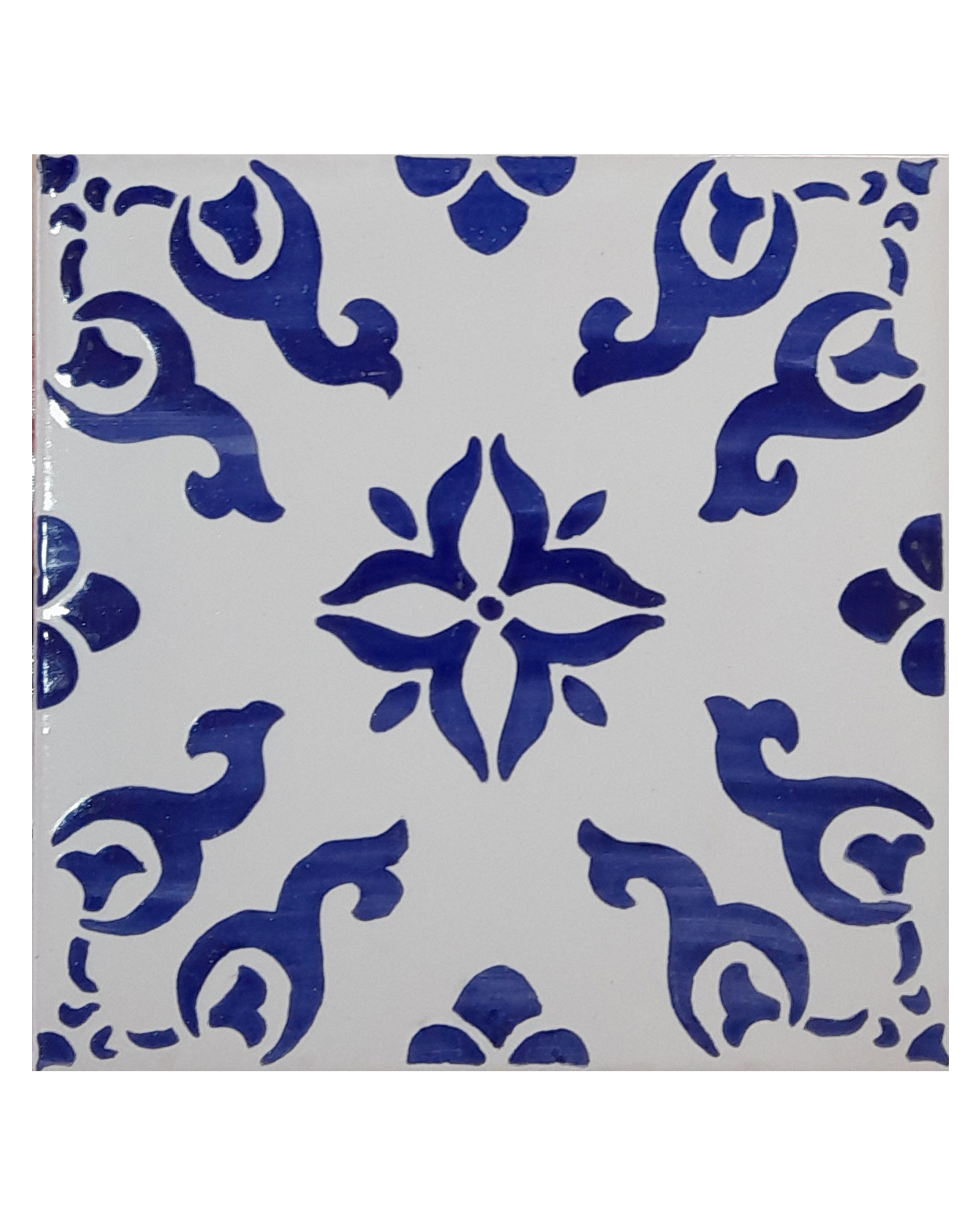
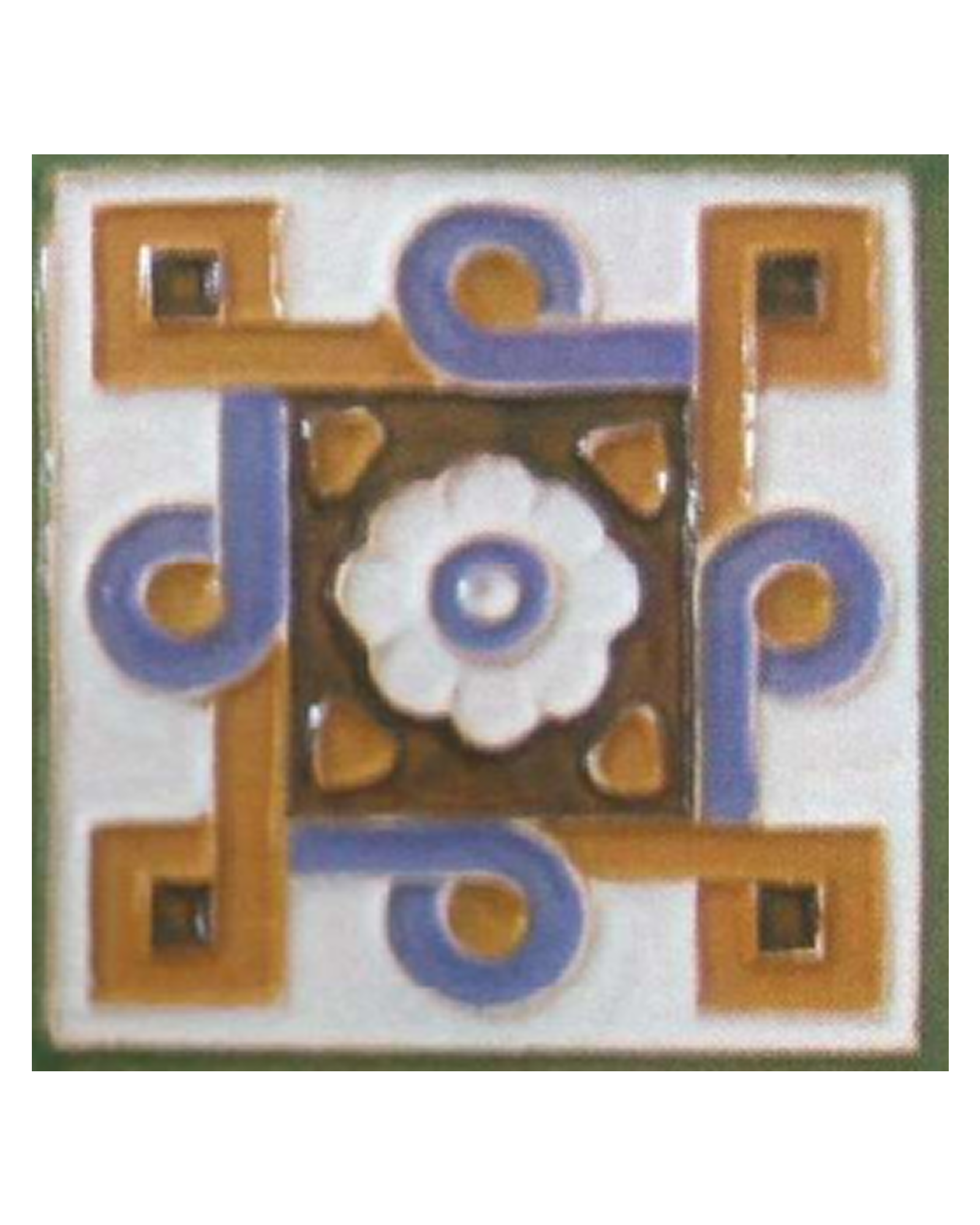
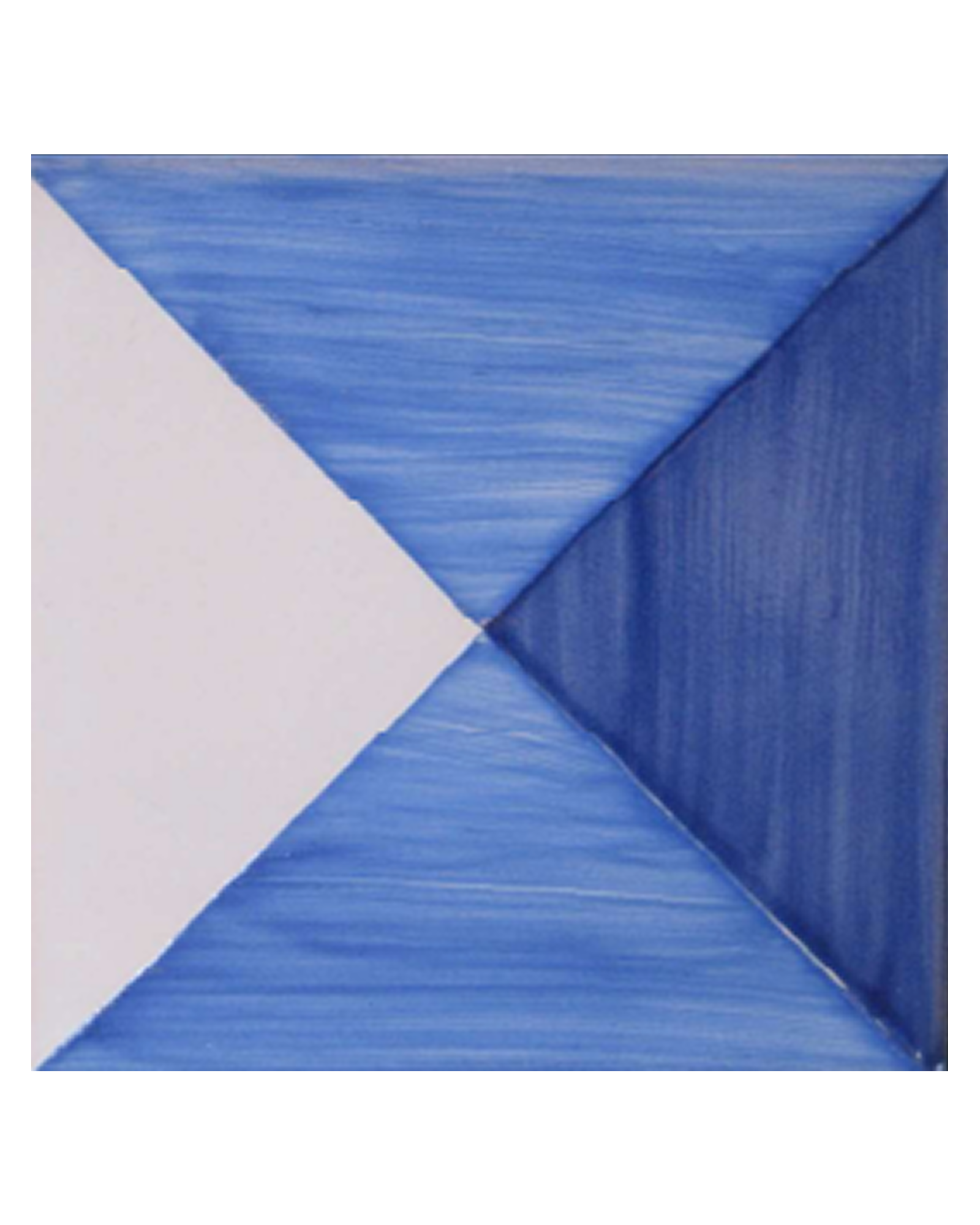
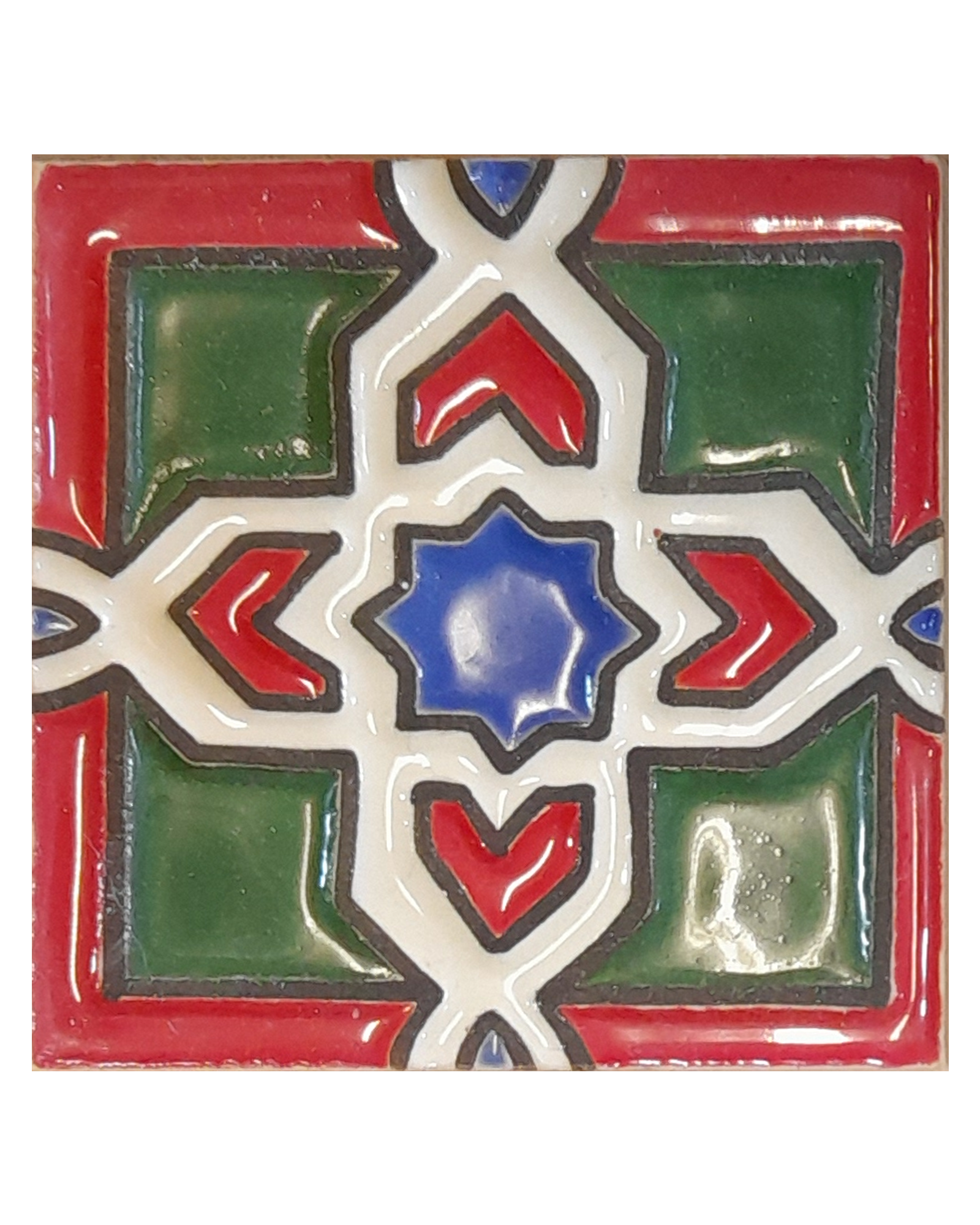
Our hand-painted ceramic tiles take inspiration from traditional azulejo, hand-painted terracotta tiles dating back as far as the 8th century. We currently offer made-to-order field tiles and border tiles ranging in size from 5 cm to 20 cm. For custom orders, please get in touch.
Spanish Field Mosaic Tiles

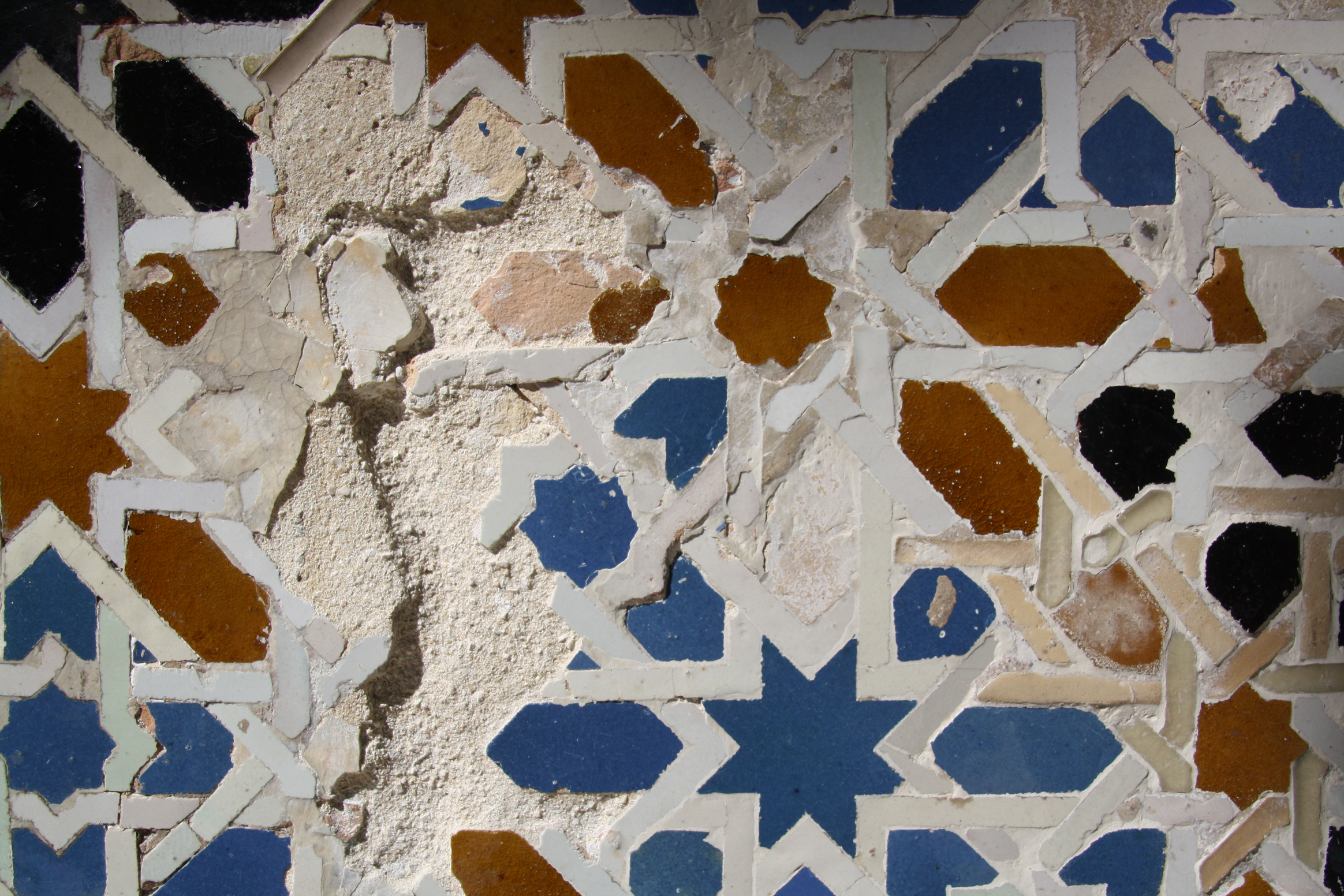
The Ancient Origins of Spanish Terracota Tile
In the 8th century, Babylon which sits in present-day Iraq, fell under the same caliphate as al-Andalus, the area of Muslim conquest in Southern Spain and Portugal. As ideas traveled from east to west, Magrebi, Spanish and Portuguese artisans adapted the ways of veteran artisans from the Orient.
Our hand-painted ceramic tiles take inspiration from the great legacy of the artisans of the Hispano-Arab kingdom that ruled southern Spain for 800 years.
Glazed ceramic azulejo tile has since become a distinguish mark of Spanish and Spanish Colonial architecture and interior design.
Spanish Border Tiles
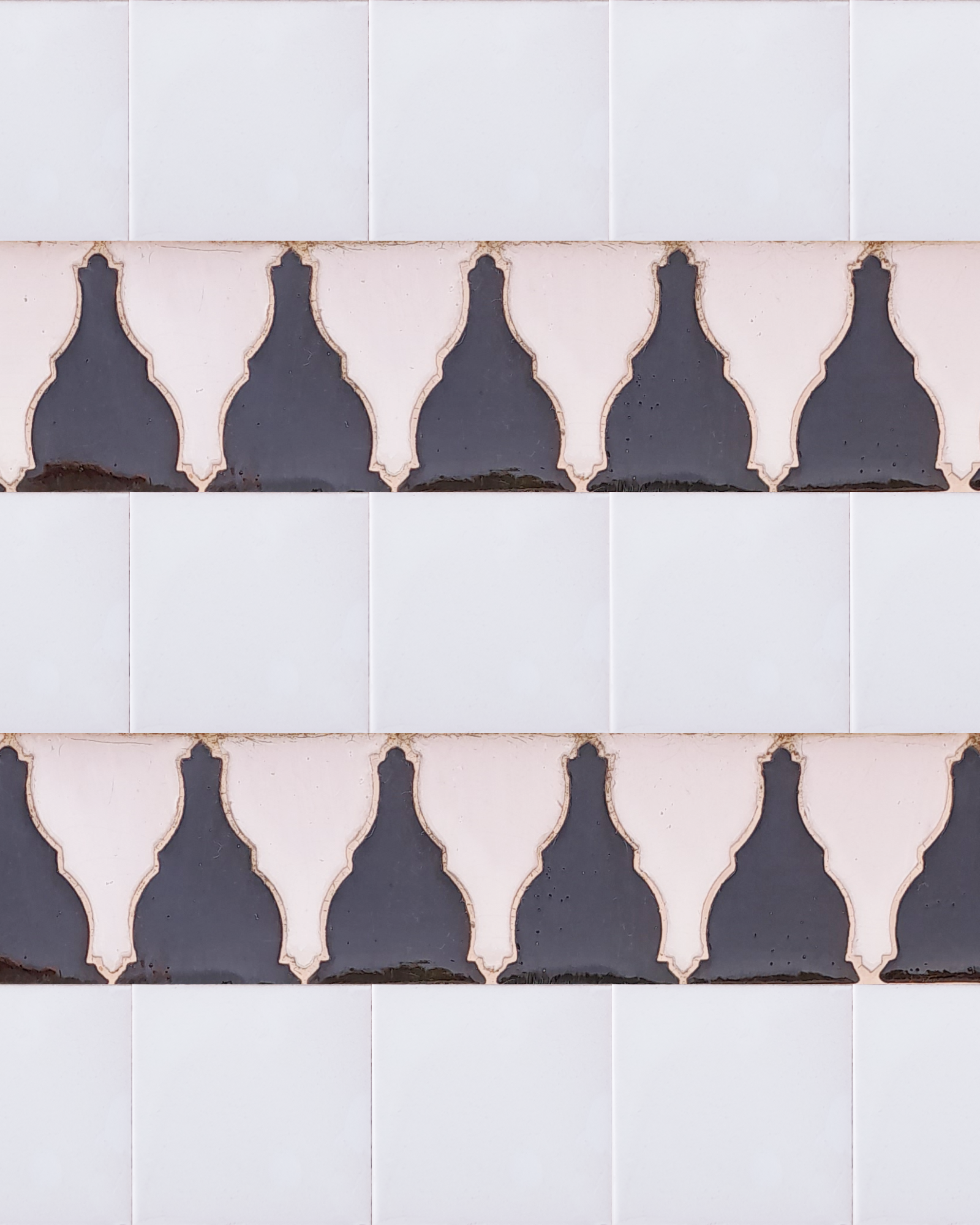


Mosaic Tile: A Distinguishing Mark of Spanish Colonial Style
Until the mid-13th century, Spanish glazed tile was restricted to cool tones like cobalt blue, turquoise, white, and green — colors that were already popular in the East. Tiling was restricted to small areas, above a arched window or to highlight the top of a building like a minaret.
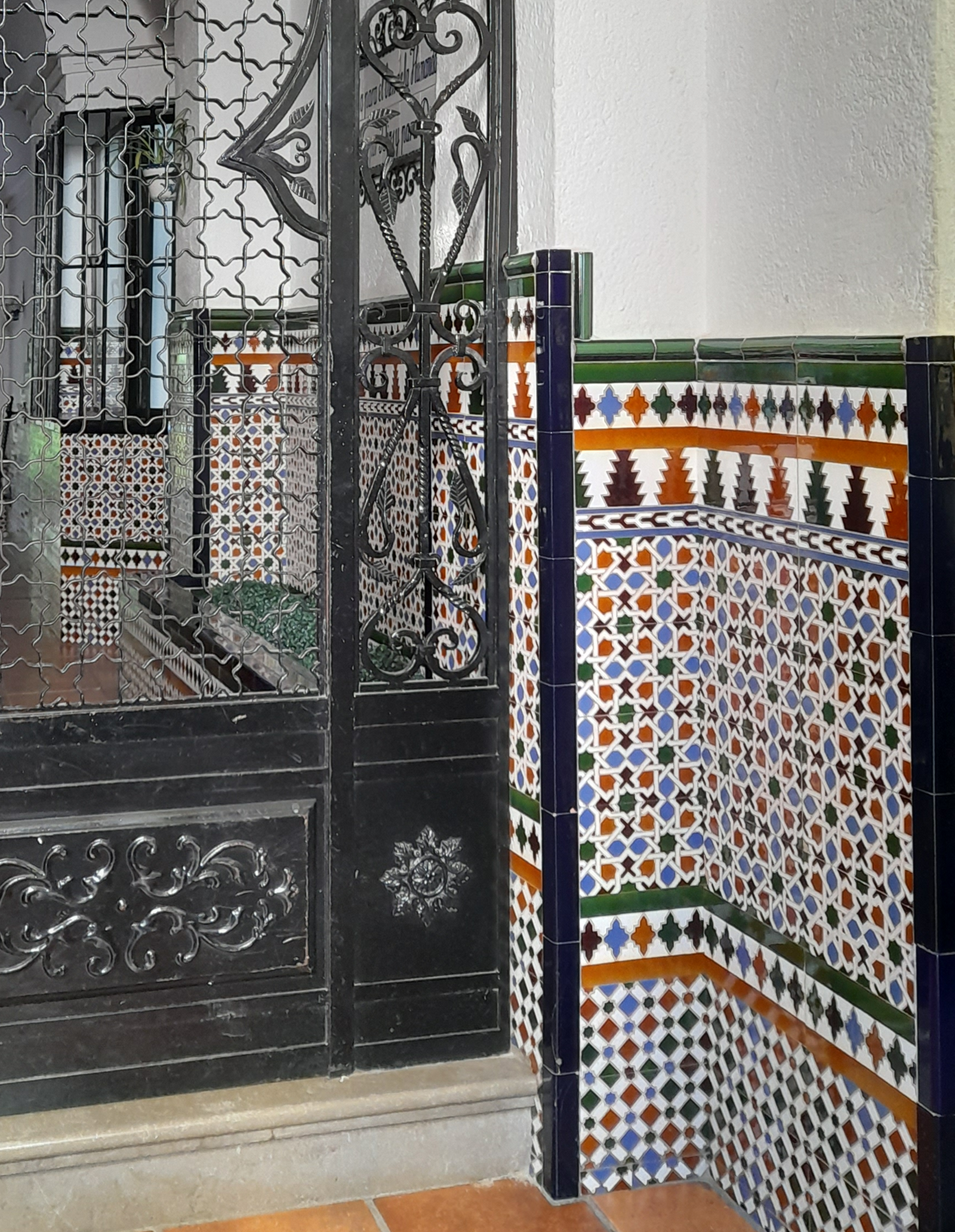
The Nasrids of al-Andalus, the last Muslim stronghold on the peninsula, embraced architectural grandeur. Using a method called zellige in the Magreb or alicatado in Spain, Andalusí artisans created vast mosaics out of diminutive geometric pieces.
While older Roman tessellation pieced together small equal-sized bits of cut stone, the new Spanish alicatado eschewed the need for uniform pieces and does away with stone-cutting. Instead, Hispano-Arabs relied on the more malleable terracotta tile and precise geometric calculations to achieve greater variety in size, shape, and color. In traditional alicatado, the mosaic reflects “the fractal pattern of nature, which repeats itself and carries the self-knowledge of the whole in every part.”
This distinctive mosaic style has become synonymous with traditional Spanish architecture and a staple in Spanish Colonial homes.
Traditional Spanish Relief Tiles

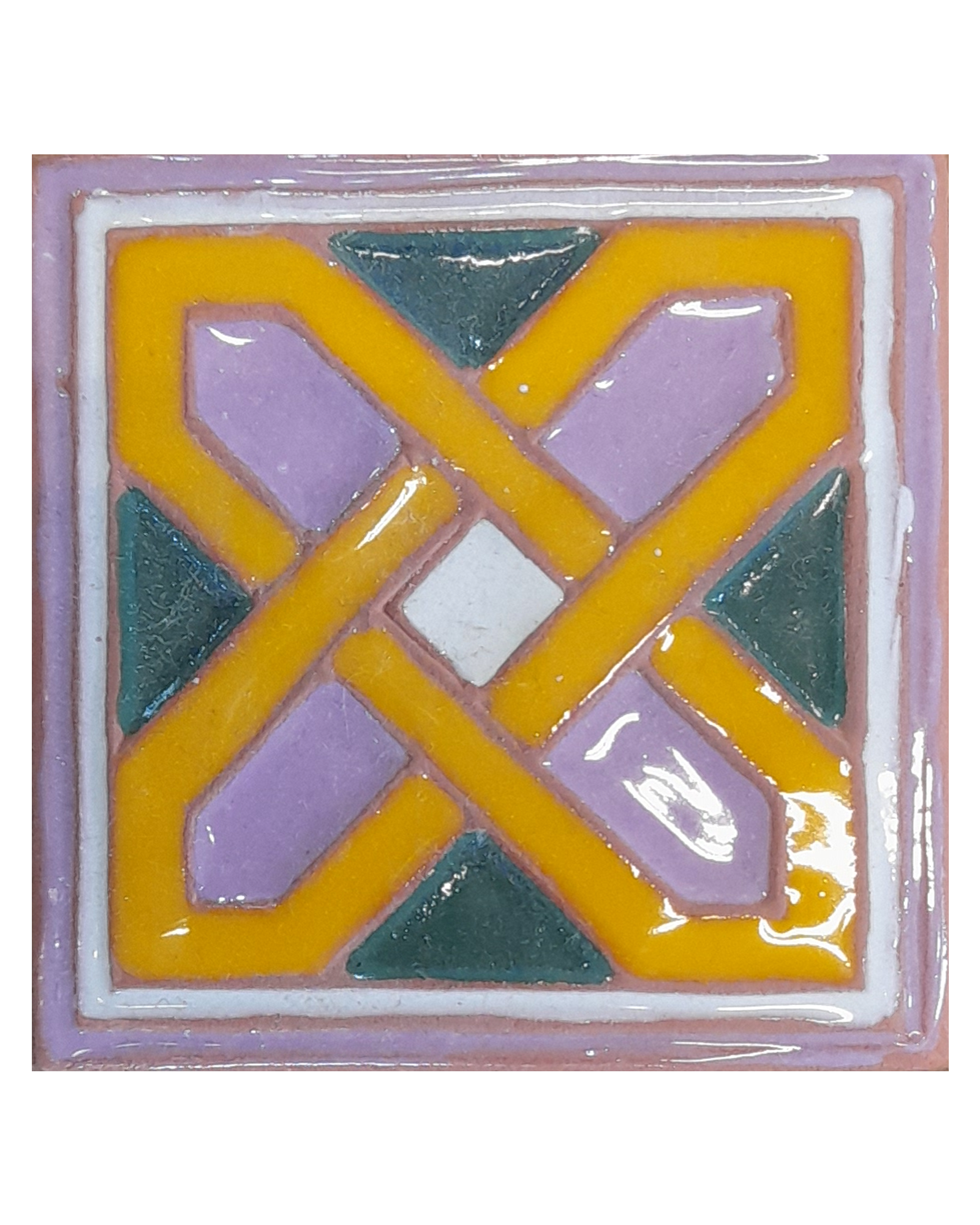
Traditional Spanish Ceramic Tile in the Modern Home
Spanish artisans continue to make earthenware tiles the old-fashioned way. Used for baseboards, kitchen backsplash or as accents in flooring, these ancient designs have a historic character to a room, garden, or garden.
Through the peninsula, flooring tends to be of terracotta clay inset with a few bright decorative tiles.
In southern Spain, tiles are also used in wainscot, baseboard, window seats and in as decorative border above sinks.
The staircase is another traditional place where Spanish ceramic tiles absolutely shine. The tread is usually plain while the riser, which gets less wear, bears colorful tiling.
Beyond their aesthetic value, tiled walls or floors make interiors cooler, a must in southern Spain and Maghreb.
Collections
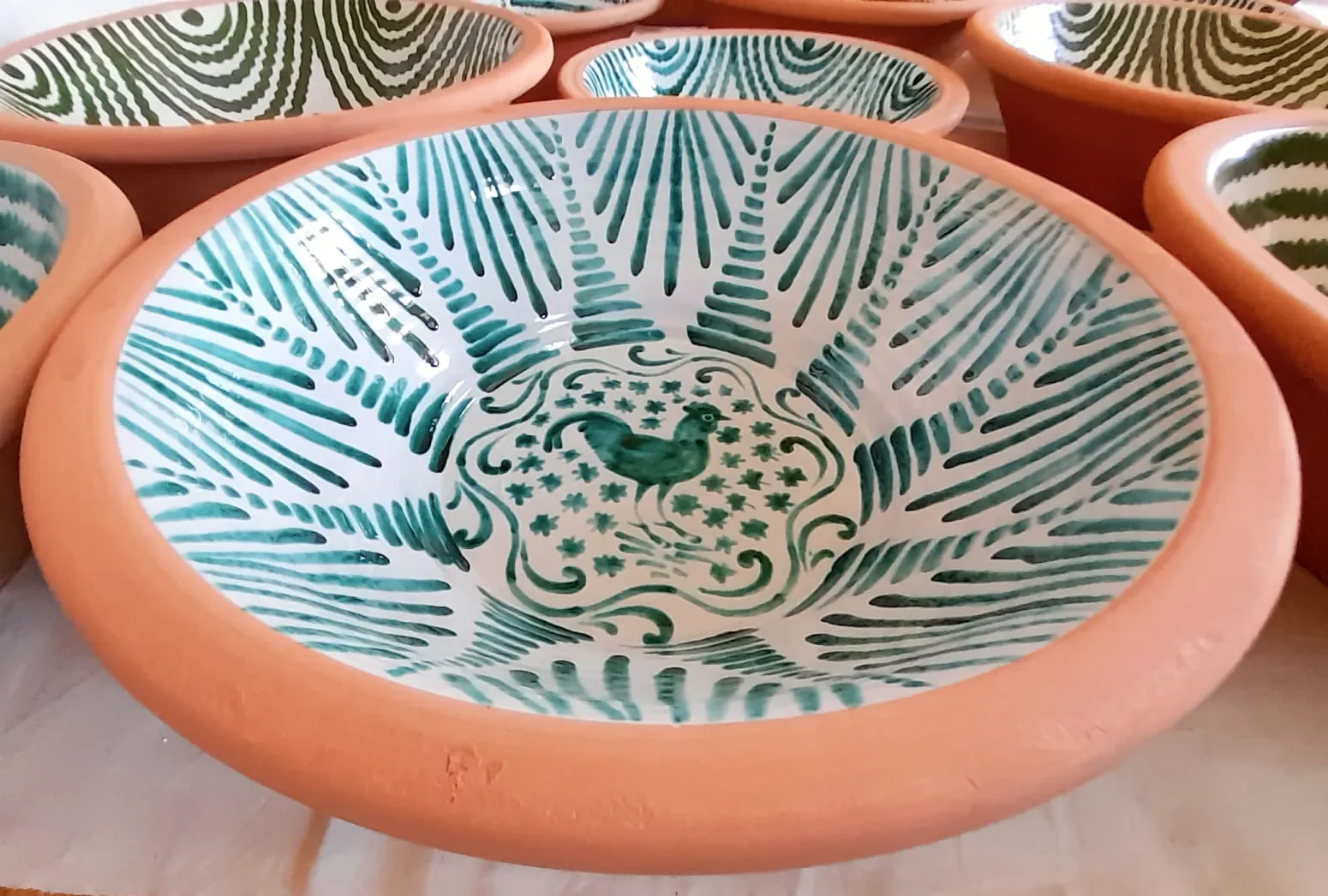
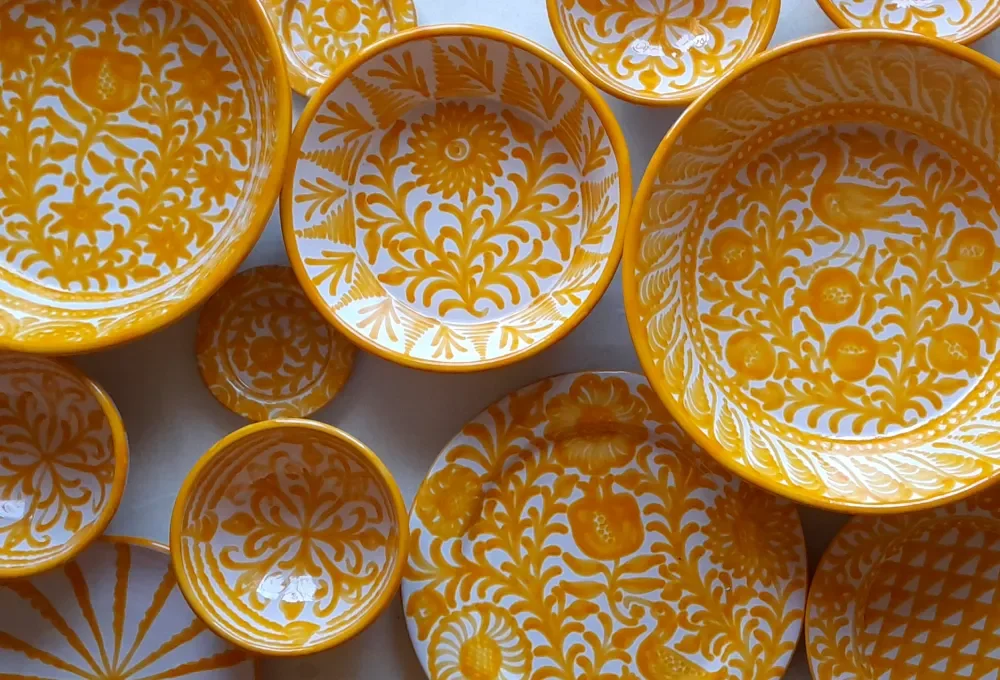
We work across Spain and Portugal to produce the best artisan ceramic products for the home and kitchen.


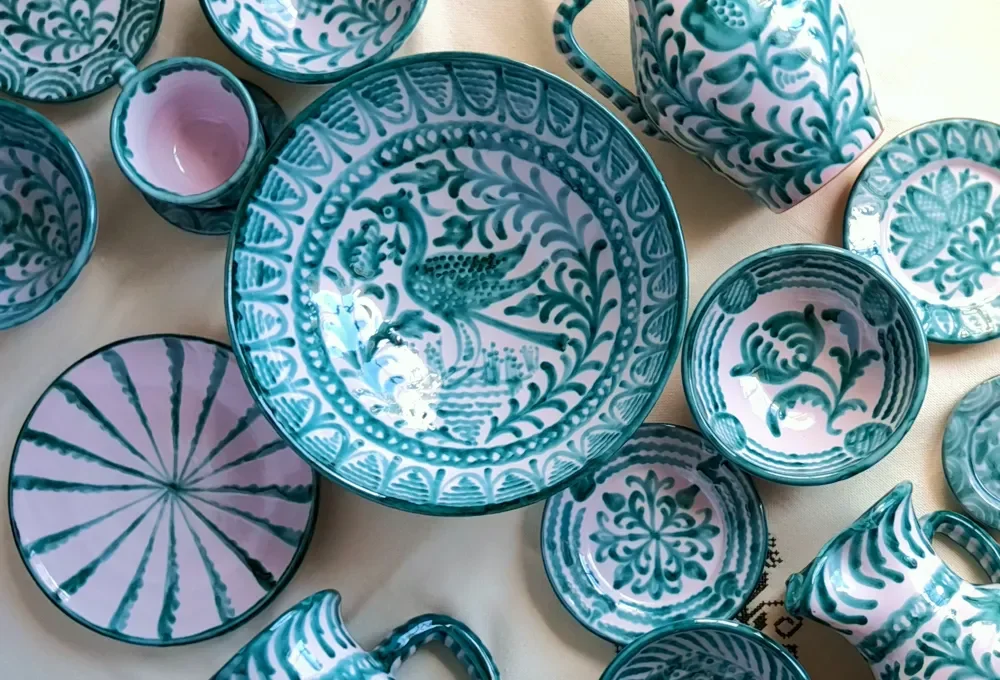
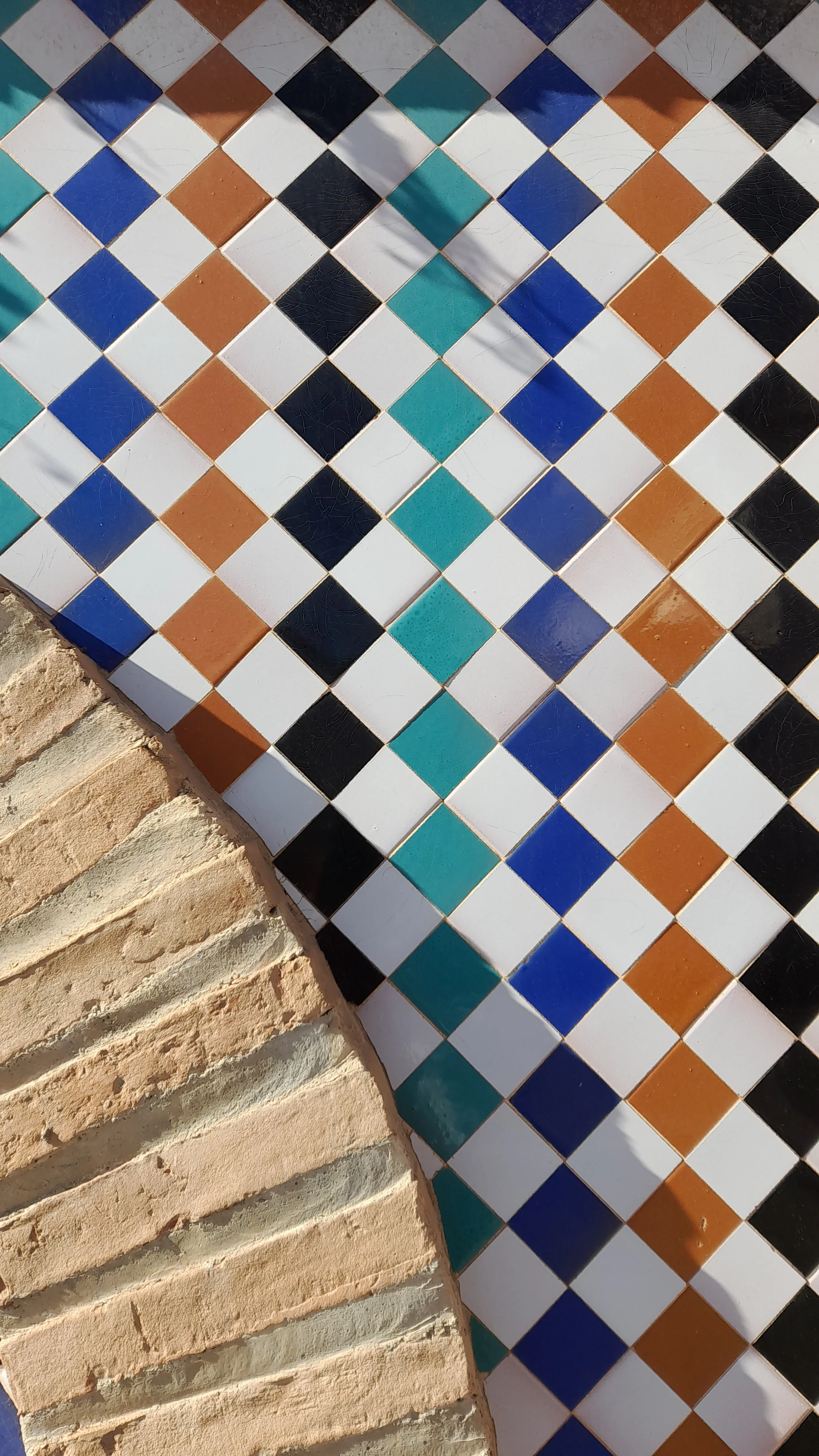
Our Celosía hand-painted ceramic tile is suited for interior and exterior decorations. Handmade in Spain, these tiles feature intricate patterns reminiscent of traditional Hispano-Arab designs.
Perfect for kitchen backsplash, kitchen floors, bathroom walls, patio floors, stairs and fireplaces.
Minimum order: 1/2 square meter
20 × 20 cm: 13 pieces
15 × 15 cm: 23 pieces
Colors available: We offer about 18 different colors including our traditional blue, green, purple, and yellow. To order a different color other than the one listed, please get in touch.
Production Lead Time: Kindly note, while we do hold some stock, many of our items are made to order. If out of stock, the production lead time is 4-6 weeks. For updates on current availability, please contact hello@casapletorica.com.