
When terracotta tile becomes a major element in Hispano-Arab architecture
In the East, turquoise tiles served to underline kufic script on buildings as seen in Jam Mosque in Afghanistan or to highlight the top of a tower as in the Kalyan Minaret in Uzbekistan, a spartan structure that stands out against the rest of the 15th century mosque complex next to it.
We see the same trend emerge in the Maghreb. The Kutubiya Mosque in Marrakech still boasts two panels of green-blue ceramic tile in the balcony and spire of its minaret. The minaret of the Kasbah Mosque contains several elements that would become mainstays in Spanish architectural ornamentation in the next century: the multifoil arch, the persistent use of the blue palette, the ubiquitous sebka, and Solomon’s Seal.
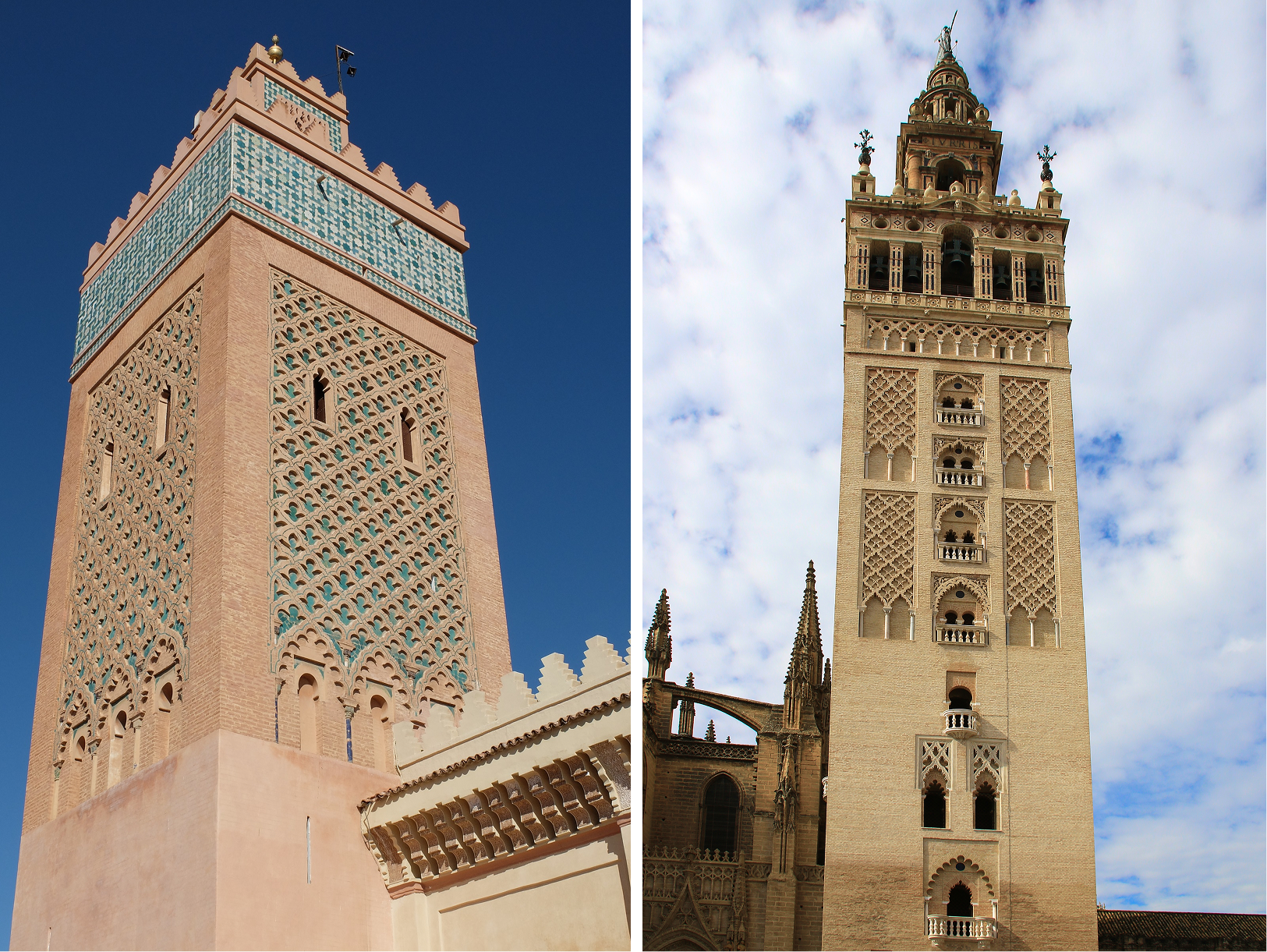
12th century minaret of the Kasbah Mosque in Marrakech; La Giralda, a minaret built in Sevilla 5 years later
A frieze of blue-green and white zellige tiles wraps around the balcony of Kutubiya’s minaret. Each tile bears the 8-pointed star or Solomon’s seal. For a similar effect, try our Terracota Estrella tile.

Our Estrella On Terracota hand-painted ceramic tile is suited for interior and exterior decorations. Handmade in Spain, these tiles feature intricate patterns reminiscent of traditional Hispano-Arab designs.
Perfect for kitchen backsplash, kitchen floors, bathroom walls, patio floors, stairs and fireplaces.
Minimum order: 1 lineal meter
7 × 7 cm: 14 pieces
Colors available: We offer about 18 different colors including our traditional blue, green, purple, and yellow. To order a different color other than the one listed, please get in touch.
Production Lead Time: Kindly note, while we do hold some stock, many of our items are made to order. If out of stock, the production lead time is 4-6 weeks. For updates on current availability, please contact hello@casapletorica.com.
The body of the structure also boasts a large block of turquoise ceramic tile over which sits a panel of sebka, a geometric motif similar to palmette found in Egyptian and classical Greek art.
In Spain, Sevilla’s 12th century minaret La Giralda features the same sebka. Clearly drawing inspiration from older mosques like the Kasbah Minaret, La Giralda would have been an impressive structure towering over the city. Unfortunately it lost the tiles that decorated it, suffered significant damage in the 1396 earthquake and subsequent structural changes that attempted to christianize the tower.
The scalloped arches at the base of the minaret would become synonymous with Moorish architecture in southern Spain. We find them in Córdoba’s Mosque, Granada’s Alhambra and Sevilla’s Alcázar.
The Nasrids of southern Spain embrace vibrant polychrome tile mosaics
Until the mid-13th century, most Spanish terracotta tiles were cobalt blue, turquoise, green, white or black — colors that were already popular in the East and in the Maghreb.
When we think of vibrant expansive Hispano-Arab mosaics, we are thinking of the Nasrids. Rulers of al-Andalus, the last bastion of Muslim rule on the peninsula, they built the fortified palatine city of the Alhambra where their architects explored the full polychrome possibilities of tile mosaics.
Using the same zellige technique —which we call alicatado in Spain— the Nasrids created increasingly complex geometric compositions, a legacy that Spanish artisans continue to nurture today.
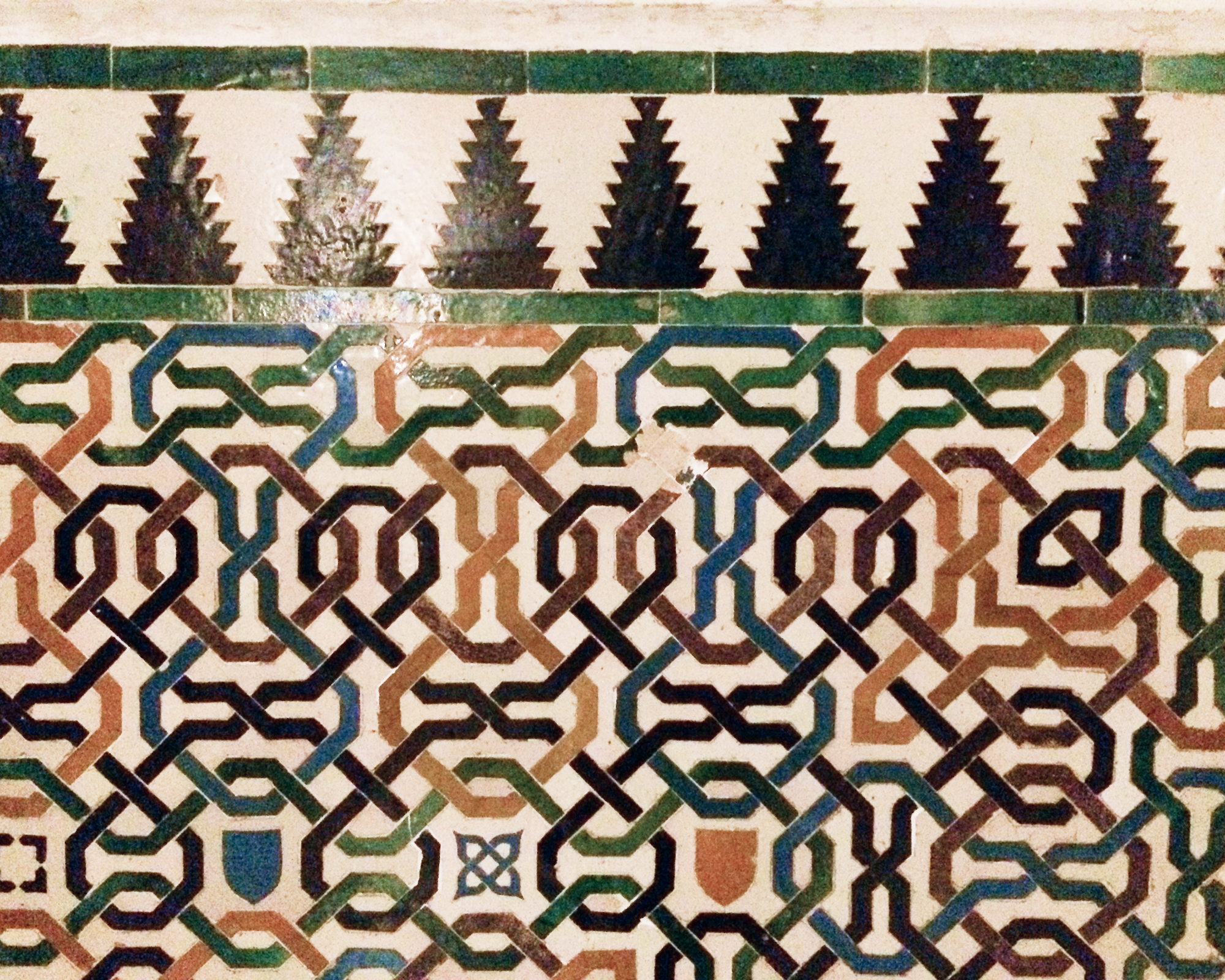
Detail of Spanish tile mosaic in Sala de las Dos Hermanas, Alhambra
One of the oldest examples of Nasrid architecture is the Cuarto Real de Santo Domingo, built in the mid-13th century in Granada. Here, the old palette of cool tones persists: blues, black, white, and a precious detail in hand-painted lusterware. However, specks of orange in the border tiles and brown in the geometric designs behind the kufic script foreshadow the changes to come.
By the 14th century, we find tile mosaics of thin, minute pieces like this wainscot in the room above where warmer tones —yellows and oranges— liven up the old palette.
Though first used timidly to highly key architectural features, tin-glazed tile mosaic would become a characteristic feature in construction.

Our Cadenas hand-painted ceramic tile is suited for interior and exterior decorations. Handmade in Spain, these tiles feature intricate patterns reminiscent of traditional Hispano-Arab designs.
Perfect for kitchen backsplash, kitchen floors, bathroom walls, patio floors, stairs and fireplaces.
Minimum order: 1 lineal meter:
10 × 20 cm: 5 pieces
Colors available: We offer about 18 different colors including our traditional blue, green, purple, and yellow. To order a different color other than the one listed, please get in touch.
Production Lead Time: Kindly note, while we do hold some stock, many of our items are made to order. If out of stock, the production lead time is 4-6 weeks. For updates on current availability, please contact hello@casapletorica.com.

Our Cadenas hand-painted ceramic tile is suited for interior and exterior decorations. Handmade in Spain, these tiles feature intricate patterns reminiscent of traditional Hispano-Arab designs.
Perfect for kitchen backsplash, kitchen floors, bathroom walls, patio floors, stairs and fireplaces.
Minimum order: 1 lineal meter:
10 × 20 cm: 5 pieces
Colors available: We offer about 18 different colors including our traditional blue, green, purple, and yellow. To order a different color other than the one listed, please get in touch.
Production Lead Time: Kindly note, while we do hold some stock, many of our items are made to order. If out of stock, the production lead time is 4-6 weeks. For updates on current availability, please contact hello@casapletorica.com.
Hispano-Arab tile mosaic is the bedrock of the modern Spanish azulejo tradition.
Though younger generations of artisans absorbed influences from the Italian Rennaissance, the Nasrid legacy remains the foundation of the craft, inspiring new techniques like cuerda seca and arista.
See our traditional Spanish tiles for more.
