
The Ancient Origins of Spanish Ceramic Tiles
Though ceramic tile has become a quintessential element in modern Spanish and Spanish Colonial architecture, its roots dig deep into the ancient cultures of the Middle East. Introduced to the Maghreb and Iberian Peninsula after the Muslim conquest, painted tin-glazed terracotta tile would revolutionize Spanish architecture.
Glazed hand-painted terracotta as ornament in Mesopotamia
The use of glazed terracotta as a decorative element dates back to that cradle of human civilization known as Mesopotamia. The Mesopotamians gave us the wheel, one of the oldest codes of law and innovations in irrigation that led to the rise of agriculture and the permanent human settlements we call home today.
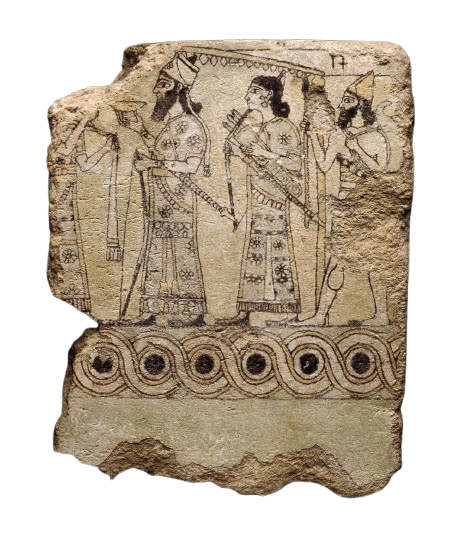
Hand-painted Assyrian wall tile, 8 century BC, British Museum
More than 800 years before the Christian era, the Mesopotamians were already producing excellent glazed murals. This wall tile found in Nimrud shows what would become one of the most enduring motifs in Portugues and Spanish mosaics, the endless knot.
The Alhambra’s Sala de los Abencerrajes features a 16th century Spanish tile mosaic where hand-painted the endless-knot motif forms frieze above the tableau below.
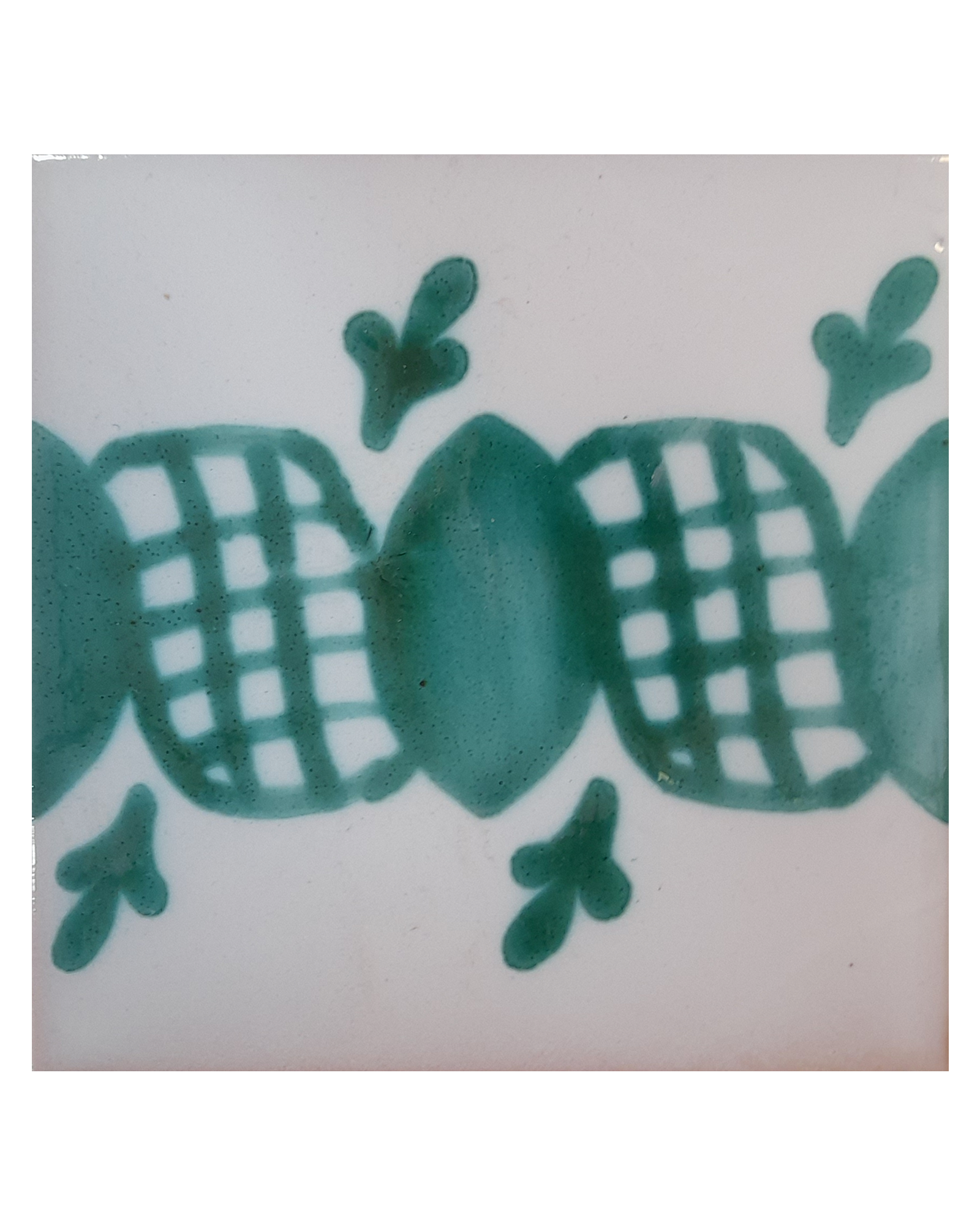
Our Tirabuzón hand-painted ceramic tile is suited for interior and exterior decorations. Handmade in Spain, these tiles feature intricate patterns reminiscent of traditional Hispano-Arab designs.
Perfect for kitchen backsplash, kitchen floors, bathroom walls, patio floors, stairs and fireplaces.
Minimum order: 1/2 square meter:
15 × 15 cm: 23 pieces
Colors available: We offer about 18 different colors including our traditional blue, green, purple, and yellow. To order a different color other than the one listed, please get in touch.
Production Lead Time: Kindly note, while we do hold some stock, many of our items are made to order. If out of stock, the production lead time is 4-6 weeks. For updates on current availability, please contact hello@casapletorica.com.
Above, our glazed ceramic tile Tirabuzón features the variation of the endless knot motif.
Polychrome enamelled brick with motifs in relief in Babylon
Closer to our time, we can point to the Great Gate of Ishtar with its enamelled terracotta in cobalt blue and sea green, decorated with more than 500 dragons and bulls in relief, also made of painted brick, this time in shades of yellow. Built in the 6th century to guard the entrance of the great city of Babylon, this gate was meant to awe and it still does.
This ancient color palette of blue, green, black, white and yellow would persist in the East, and in Hispano-Arab art for centuries.
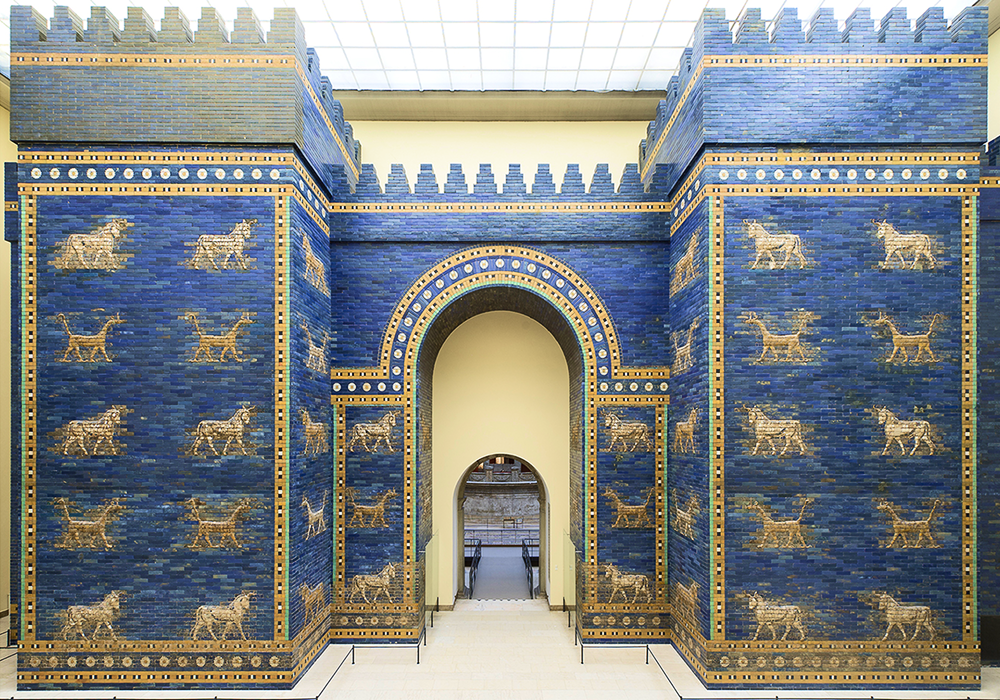
The Great Gate of Ishtar, Berlin Museum
In the 8th century, Babylon which sits in present-day Iraq, fell under the same caliphate as al-Andalus, the area of Muslim conquest in Spain and Portugal.

This Byzantine dome in Cordoba’s mosque features hand-painted polychrome tile on the border of the central motif, an 8-pointed rosette. Source: 1881 drawing by Mariano Fuster, Academia Colecciones
Glazed ceramic tile decorates Cordoba’s mosque
By the 10th century, glazed terracotta was still a discreet decorative accent in Hispano-Arab architecture. Though the dome over the mihrab in Cordoba’s mosque is visually staggering, it owes its colorful palette to the 200 square meters of Byzantine mosaic in glass and marble tesserae.
Hand-painted terracotta tiling only makes a shy contribution.
A small band of tile adorns the edge of the rosette, the central motif in the cupola. Molded to fit the curvature of the rosette, these fired clay tiles bear a schematic vegetal motif that looks like a palm frond — a decorative element known as sebka — that we would find repeated in many forms in Portuguese and Spanish architecture

Detail of dome in Cordoba’s mosque. Source: Antonio Entrena Aznarte, Retablo Cerámico
Glimmers of polychromatic azulejo
Terracotta tile would become a major element in Hispano-Arab architecture under the Nasrids who took Granada — the city and nearby provinces — in the 13th century.
Having struck a delicate peace agreement with the Catholic monarchs who were pursued a “reconquista” of the southern territories lost to Muslim incursions in centuries past, the Nasrids enjoyed relative stability and a thriving economy that saw its prowess reflected in grand architectonic projects like the Alhambra.
Though this palatine city includes military structures, the monarchs decorated the residential quarters with great care.
Mixing polychrome azulejo tile with elements in kufic script and stalactite-like plaster moldings, the Nasrids would reach the apogee of Hispano-Arab architectural splendor on the peninsula during their reign.
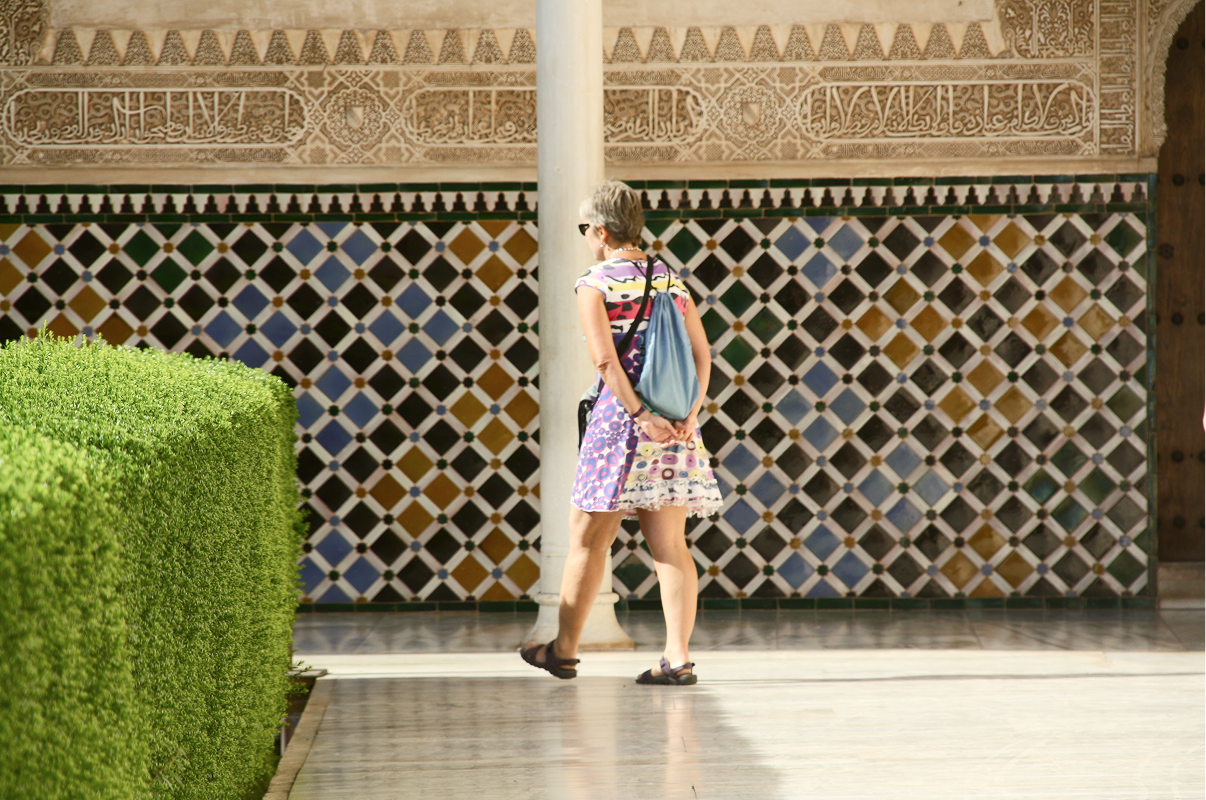
An afternoon stroll in the Alhambra, Granada
See our traditional Spanish tiles for more. For customizations, please get in touch here.
