
Stunning Characteristics of Fajalauza Ceramics
Looking at a Fajalauza piece is like stepping into a flower-filled courtyard in Granada. Pots filled with overhanging flowers and plants cover the walls. Running water in a little fountain gurgles and songbirds trill all around.
Andalucía is known for its soporific heat yet stepping through the arabesque archway into one of these courtyards is like entering an oasis in the desert. It’s cool and lush and green and fragrant with the smell of jasmine and other blossoms.
Perhaps you can take shelter under a pomegranate tree and snack on its fruit to ward off the lethargy that sets in under the punishing sun.
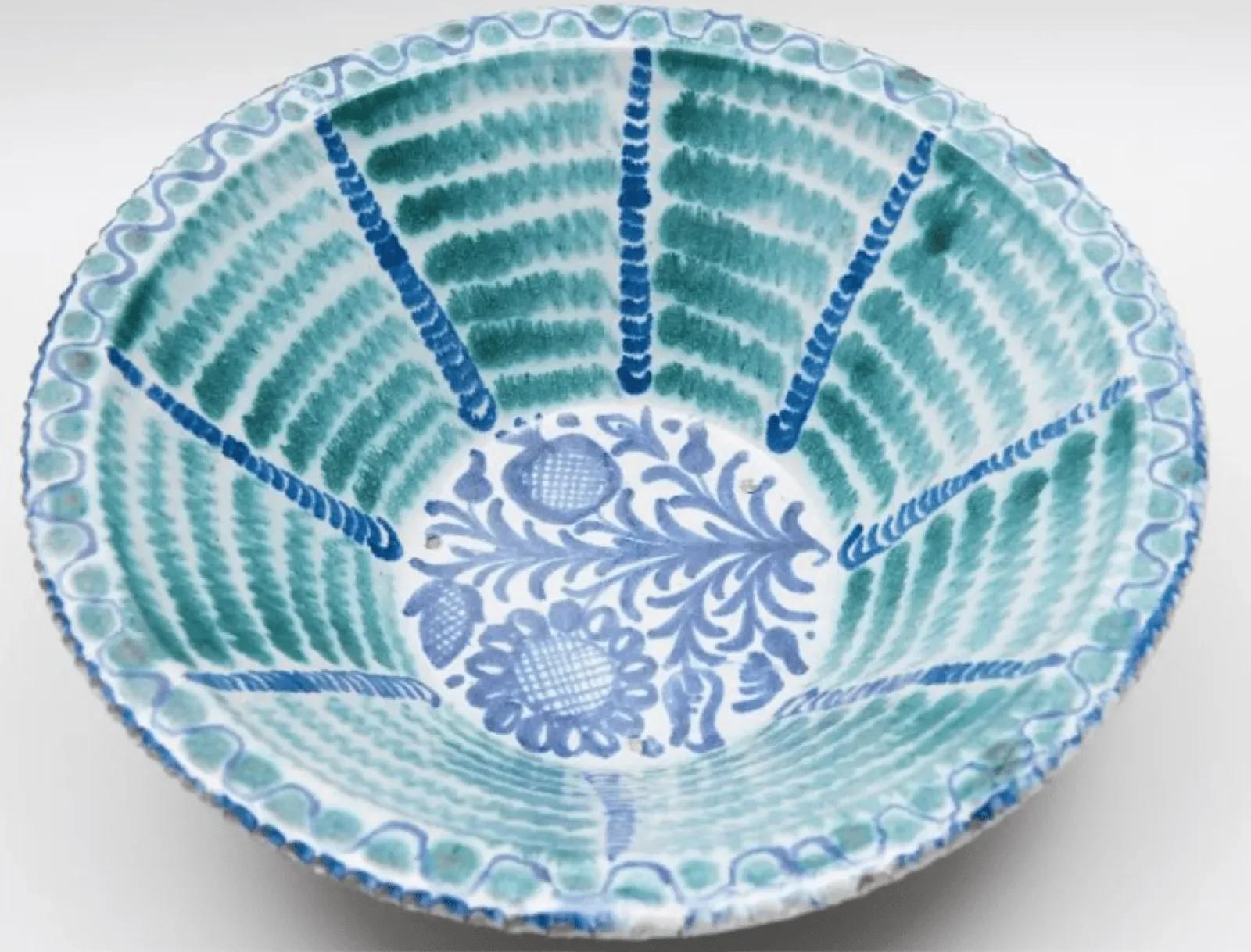
Blue and green antique lebrillo, Sorolla Museum, Madrid.
Intricate decorative patterns
Fajalauza decorations evoke the horror vacui of the Nasrid style that dominated the scene from the 13th to 15th century. Atauriques, a type of ornamentation found in Nasrid architecture, specifically in the Alhambra is a perfect example of this style. It’s as tough the artists were obsessed with filling every available space.
Similarly, Fajalauza painters often fill their bowls, pitchers and plates from base to rim. Branching patterns that start from the base and spread throughout the piece. Earlier pieces found appear simpler and lighter but by the end of the 19th century, Fajalauza artisans had established the maximalist style now known as repintado.
Naturalistic vegetal motifs
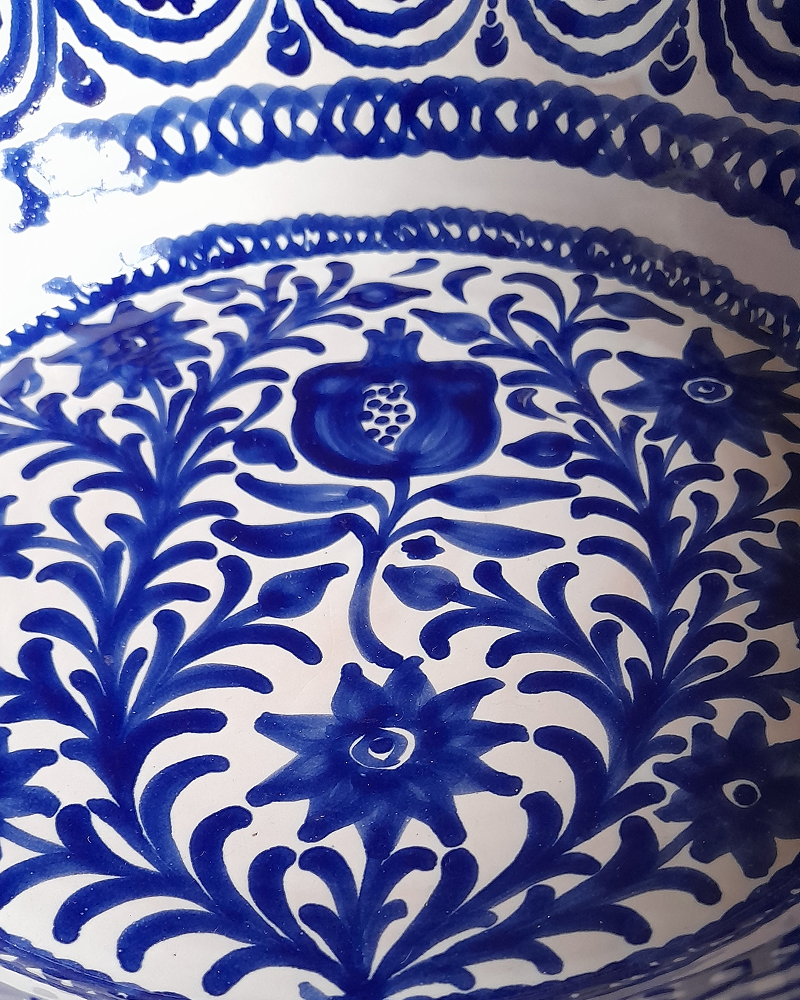
Lilies, daisies, creeping vines adorn every surface. Some flower designs harken back to their Islamic past: oval petals interlace around a thick central point or a reticulated circle.
Mixed with the flowers, we find fruits, especially pomegranates. The pomegranate motif is especially significant as it is the city’s namesake.
The result is a feast for the eyes that makes this pottery a beloved collector’s item.
Birds and other wildlife
The use of small birds, butterflies, and dragonflies highlights elements of local fauna. Among the birds, peacocks, starlings and wading birds stand out. Finding small warblers hiding among the ramified patterns is always a delight.
Butterflies and dragonflies also appear in Fajalauza design.

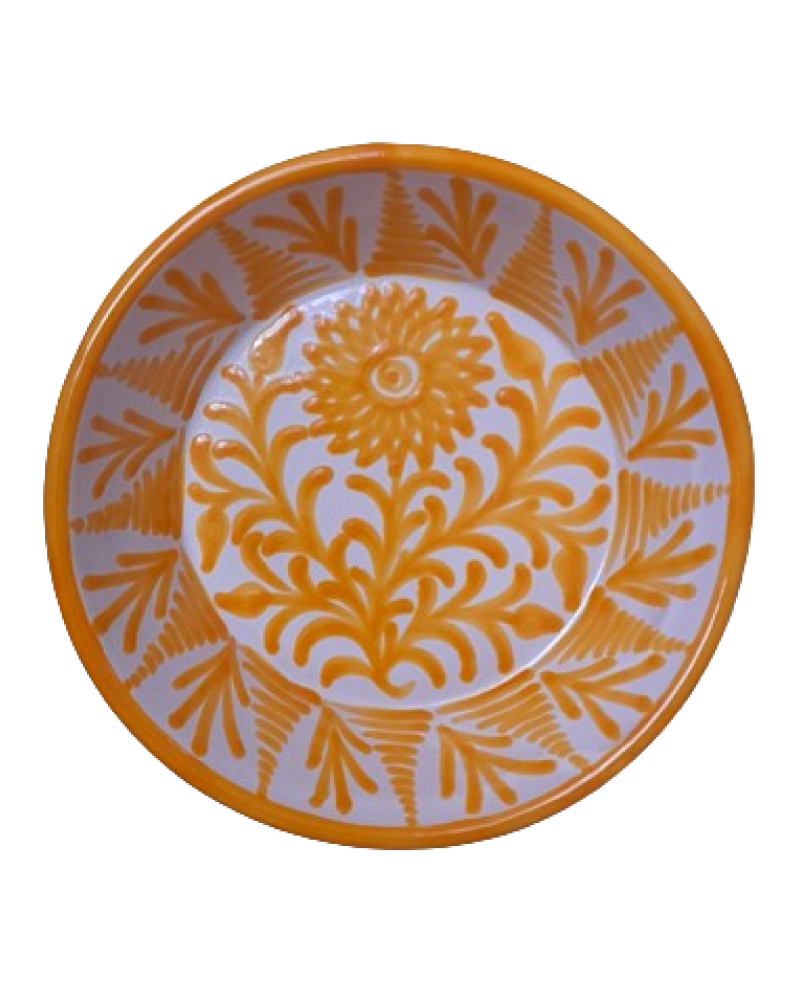
A closeup of our Estornino Serving Bowl.
Geometric Patterns
Geometric patterns like Arabica played a pivotal role in Islamic art given that representational art is discouraged. Fajalauza artisans therefore relied on calligraphy, vegetal designs, geometric patterns, and figurative representation as decorative elements.
These forms still inspire our pieces today.

