

Women at Work: The Traditional Spanish Lebrillo
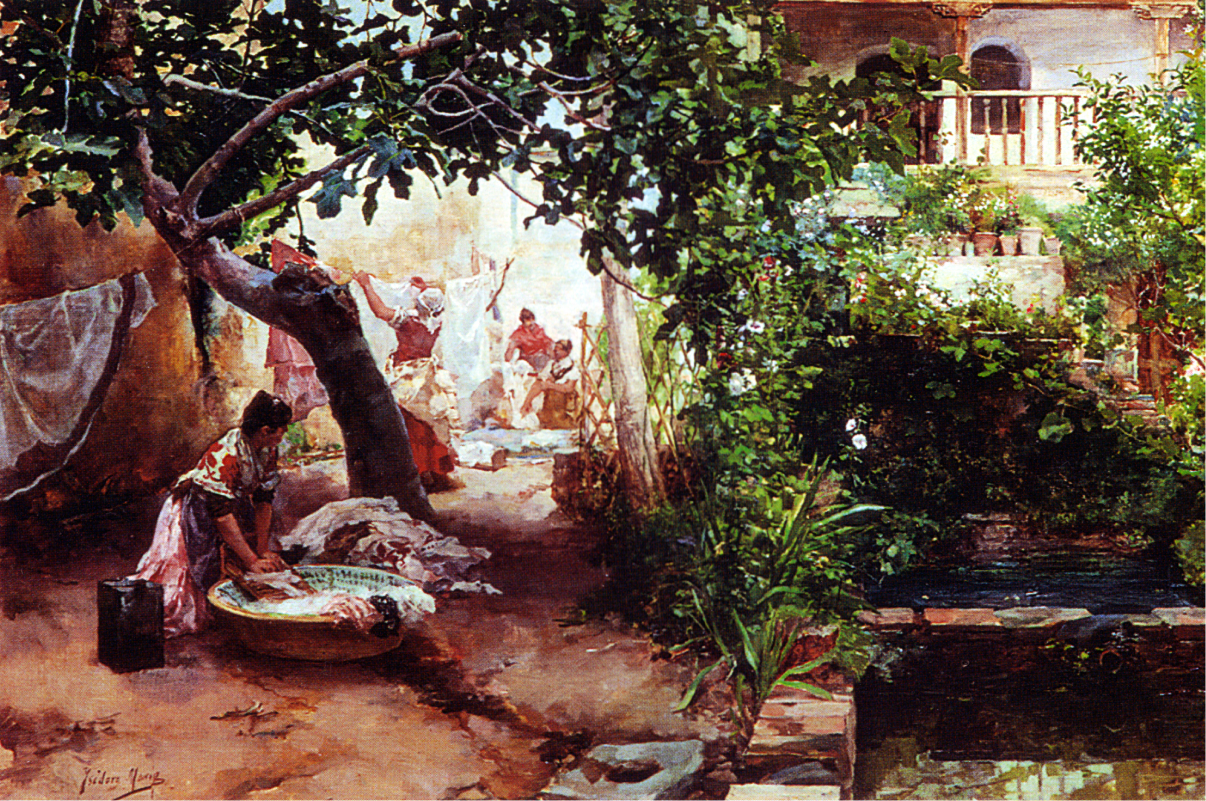
A young woman washing clothes in a lebrillo in a courtyard. “Un lavadero de Granada” by Isidoro Marín Garés, 1890. Private Collection, Casa Ajsaris, Granada.
How can a household utensil give us insight into the home?
This painting of a woman washing clothes in a lebrillo is a quintessential image of domestic life in Granada. The image depicts a scene that would have been common in daily life in Spain in the 19th century and early 20th century when the lebrillo was still a practical household technology. Other paintings and photographs from the same period show women bending over loads of clothes on the shores of the River Darro.
The lebrillo must have been a kind of technology that afforded some women privacy and made their daily chores easier. No more heaving loads of clothes to the river. Now, they could do their washing at home, in the comfort of their kitchen or courtyard.
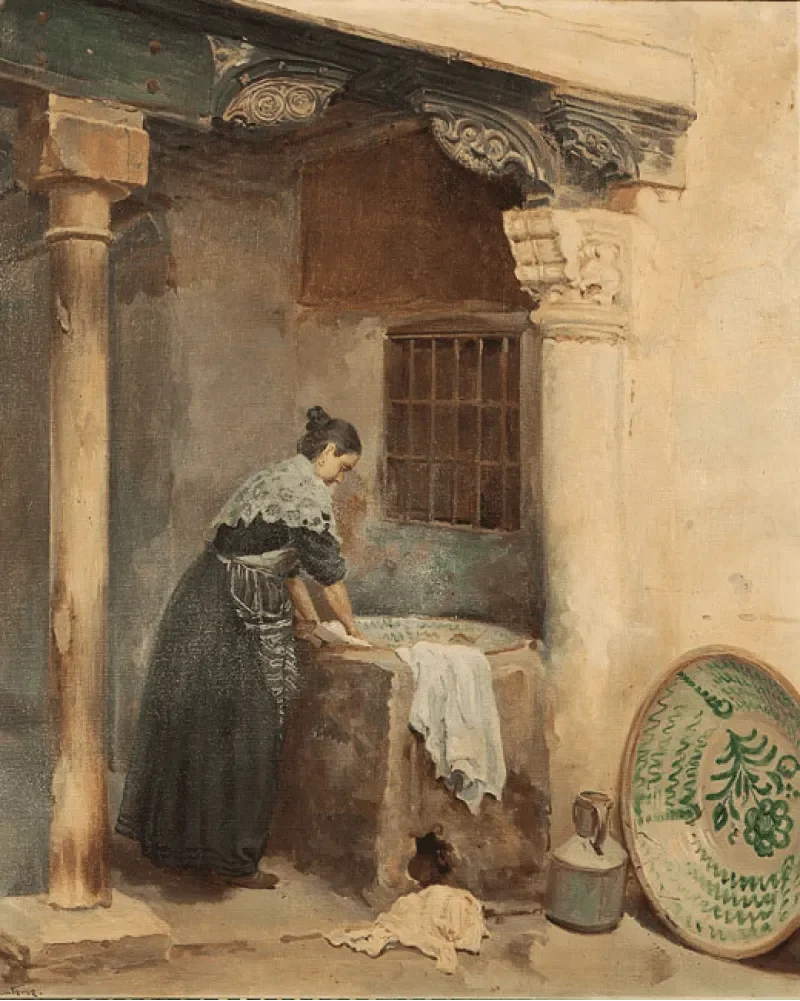
A woman washes clothes in a lebrillo basin. Another large intricately decorated lebrillo sits against a wall nearby. Painting by Rafael Latorre.

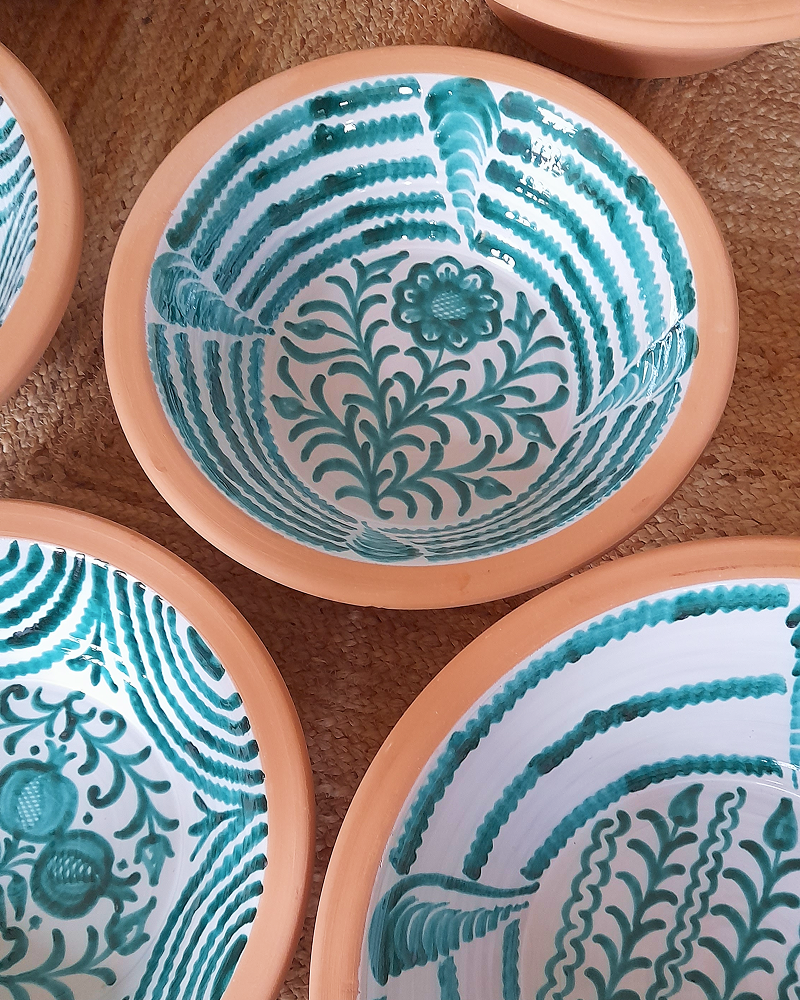


Handpainted in green over white glaze, this Green Gavilla Traditional Spanish Lebrillo features a large sunflower bouquet on the base. A pattern of concentric undulating lines adorn the walls.
While most of our lebrillo bowls feature an unglazed terracotta rim, this Gavilla design has a tin-white border.
Before the turn of the century, the lebrillo was an essential part of the furnishings of every Spanish household. Large bowls served as laundry sinks; small bowls worked for a variety of tasks in the kitchen.
Characterized by its distinctive patterns and vibrant colors, the Fajalauza lebrillo is now a beloved decorative bowl. This once humble household utensil adorns the walls and gardens of modern homes, restaurants and hotels.
Lebrillo Wall Mounts for hanging available here.
Production Lead Time: Kindly note, while we do hold some stock, many of our items are made to order. If out of stock, the production lead time is 4-6 weeks. For updates on current availability, please contact hello@casapletorica.com.
Still, “pleasure and action make the hours seem short” and so washing, it seems, was often a communal activity. In Rafael Latorre Viedma’s 1894 painting Las Lavanderas, two women are laughing and talking animatedly with a man while they launder. The yard, lush and overflowing with flowers, looks like a “carmen,” the Granada-style homes that often boast a vegetable garden, an abundance of colorful flowers, orchards, pools or even meadows.
A similar scene appears in Isidoro Marín Garés’s painting.
A well-dressed woman is sitting in the shade of a big fig tree, washing in a lebrillo while others hang clothes in the orchard.

Rafael Latorre Viedma’s 1894 painting Las Lavanderas (left). “Un lavadero de Granada” by Isidoro Marín Garés (right).
Though these paintings depict a routine, even boring, moment in daily life, the artists imbue the scene with romance: vibrant colors, bucolic setting, a fashionable woman in the foreground. There’s toil — hand washing laundry was not probably not fun — but there’s also beauty.
And then there’s the romance of the lebrillo itself. Why decorate a common household utensil with such intricate patterns?
In Granada, such decorations take inspiration from classical geometric patterns, local birds and flowers. Pomegranates, sunflowers, palms, spotless gray herons, and starlings feature prominently.
The care and craft invested in elevating this functional household item has turned it into a family treasure and a collector’s darling.
The lebrillo as family legacy

Alhambra Fajalauza Traditional Lebrilllo among other designs
Lebrillos were often passed down from generation to generation. Families hardly ever threw them out. In fact, this was where the leñador shone.
The name 'lañador' comes from the 'lañas' or staples that were traditionally used to repair ceramic or clay containers. This repairman was a busy professional who used bits of hot tin to solder cracked or broken utensils like pots, basins, pans, and stewpots.
Antique pieces often show these signs of repairs and, to collectors who appreciate that timeless craftsmanship, they make the vessels all the more valuable.