
The playful origins of the checked motif in our tile mosaics
It seems that the ubiquitous checkerboard pattern has always appealed to us humans on both the aesthetic and pragmatic levels.
Its practical application in land survey appealed to the Romans who build their cities on the grid. In Southeast Asia, cotton textiles often featured a dizzying variety of checkered patterns that would eventually become a sensation across Europe during the Industrial Revolution.
And in the Hispano-Arab mosaics found in Morocco, Portugal or Spain, simple monochrome ceramic tiles create visual wonders that still delight us today.
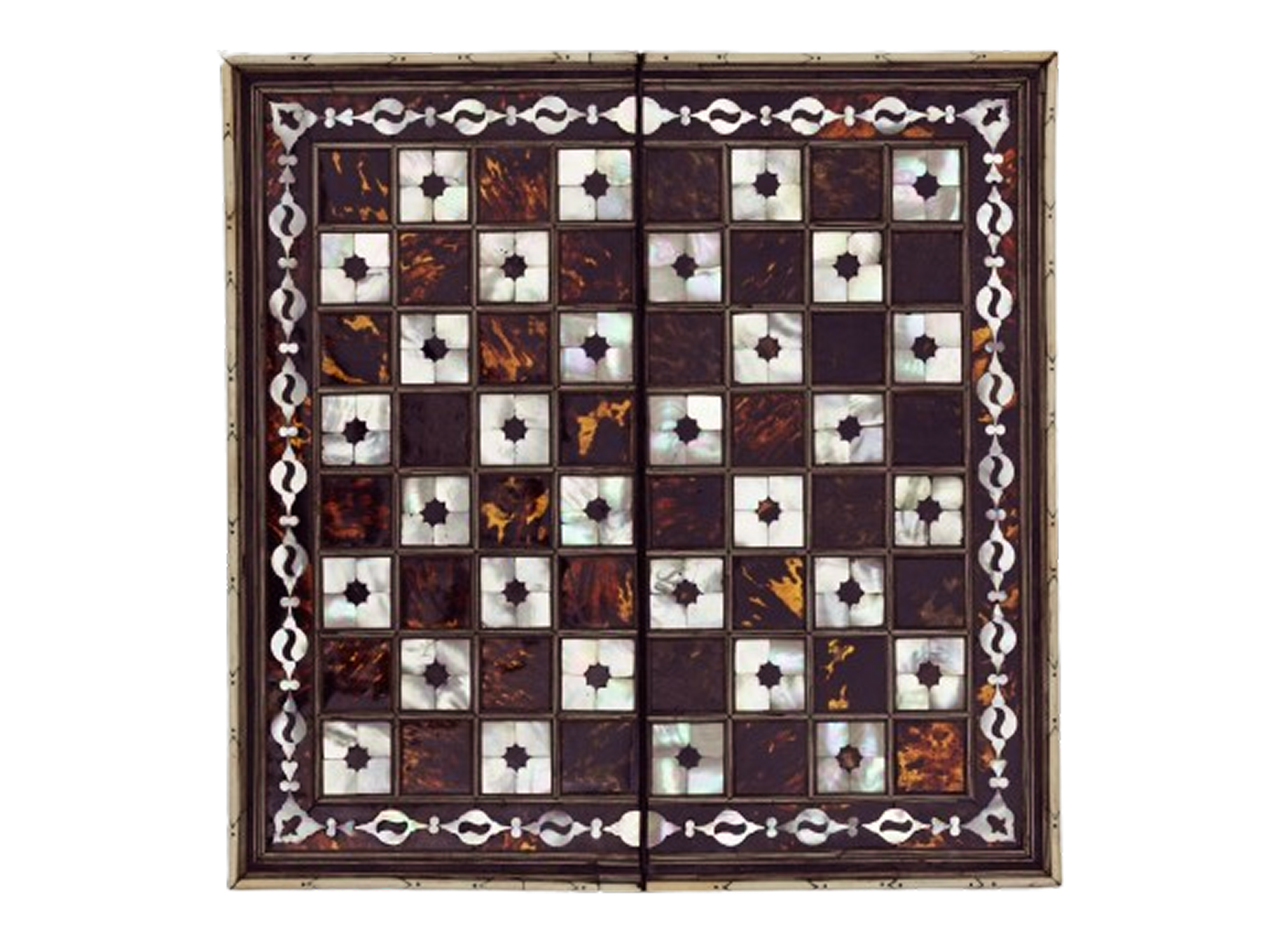
A 1600 Turkish game board for both chess and backgammon
The earliest records of the check pattern appear in Indian and Persian art where it is depicted as a square board marked by a design of intersecting horizontal and vertical lines. Scholars agree that the game played on this board is the common ancestor of today’s chess, checkers and backgammon.
After the Arab conquest of Persia, this board game then known as “Shatrandj” became popular throughout West Asia.
It likely travelled to the Maghreb and the Hispano-Arab territories of Portugal and Spain that were part of the Muslim world before reaching the rest of Europe in the Middle Ages.
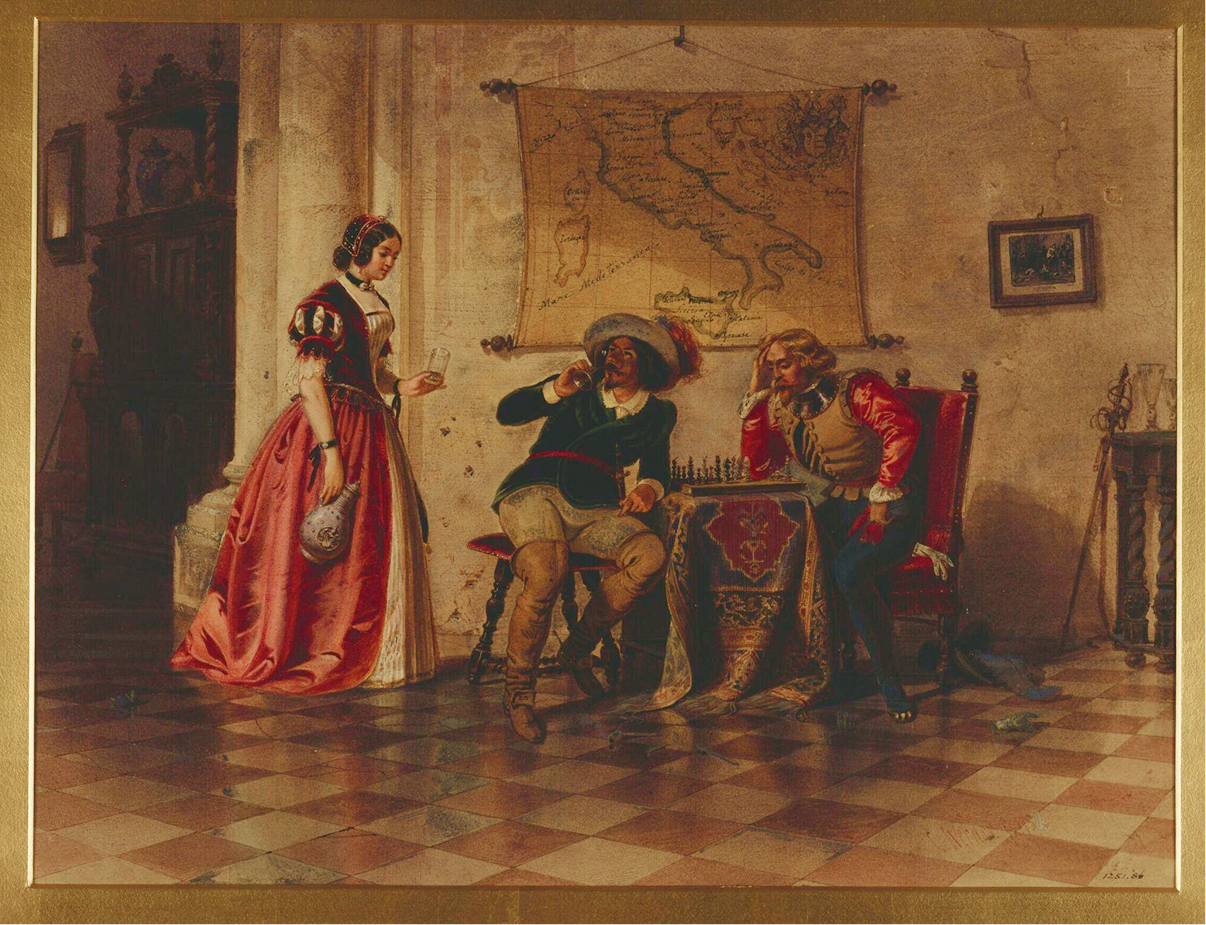
A 19th century painting by Orientalist painter Karl Friedrich Werner, Victoria & Albert Museum
The Chess Players, the 1881 painting by Karl Friedrich Werner, alludes to the provenance of this versatile check motif. As an Orientalist painter who travelled across West Asia to document its buildings in watercolors, he may very well have known of this connection.
In the painting above, a woman serves drinks to two men as they take a break from their chess game. The game board sits on small table, adorned with a Oriental carpet.
In the foreground, the artist offers an expansive view of the floor, tiled in a checkerboard pattern of large blocks.

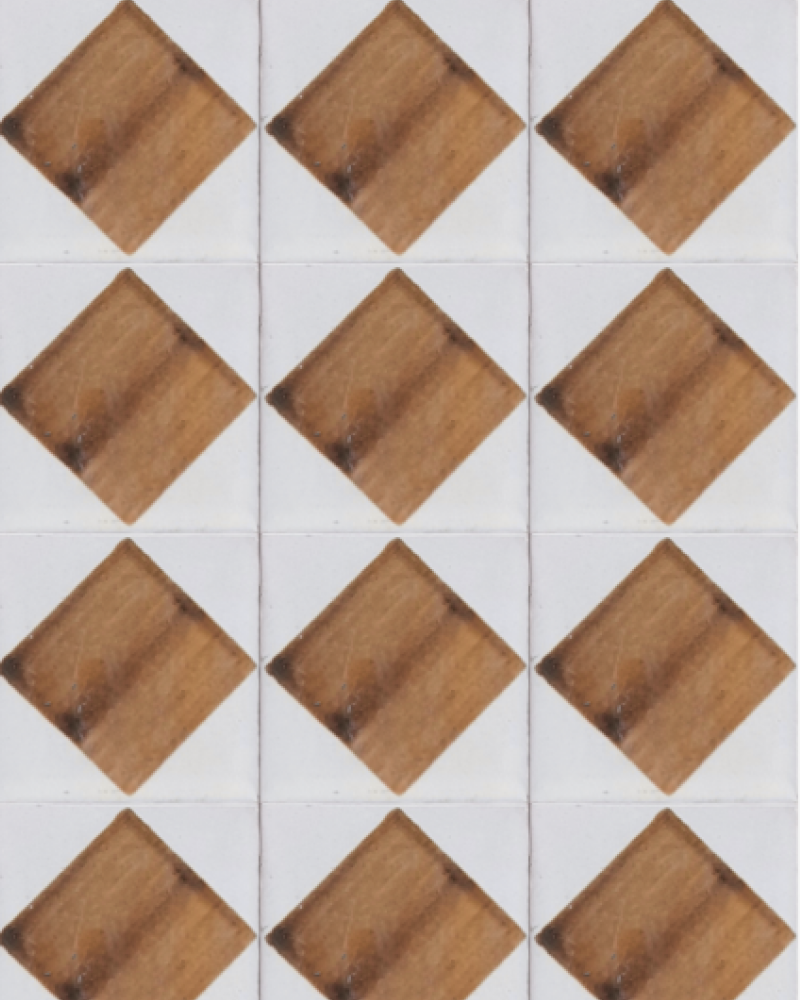
Our Cubo hand-painted ceramic tile is suited for interior and exterior decorations. Handmade in Spain, these tiles feature intricate patterns reminiscent of traditional Hispano-Arab designs.
Perfect for kitchen backsplash, kitchen floors, bathroom walls, patio floors, stairs and fireplaces.
Minimum order: 1/2 square meter:
15 × 15 cm: 23 pieces
10 × 10 cm: 50 pieces
Colors available: We offer about 18 different colors including our traditional blue, green, purple, and yellow. To order a different color other than the one listed, please get in touch.
Production Lead Time: Kindly note, while we do hold some stock, many of our items are made to order. If out of stock, the production lead time is 4-6 weeks. For updates on current availability, please contact hello@casapletorica.com.
The versatility of the checked pattern in Moorish tile mosaics
In Hispano-Arab territories where vast colorful ceramic mosaics would become a staple in architectural decoration, glazed monochrome square tile was the simplest tessera to make and offered endless compositional variations.
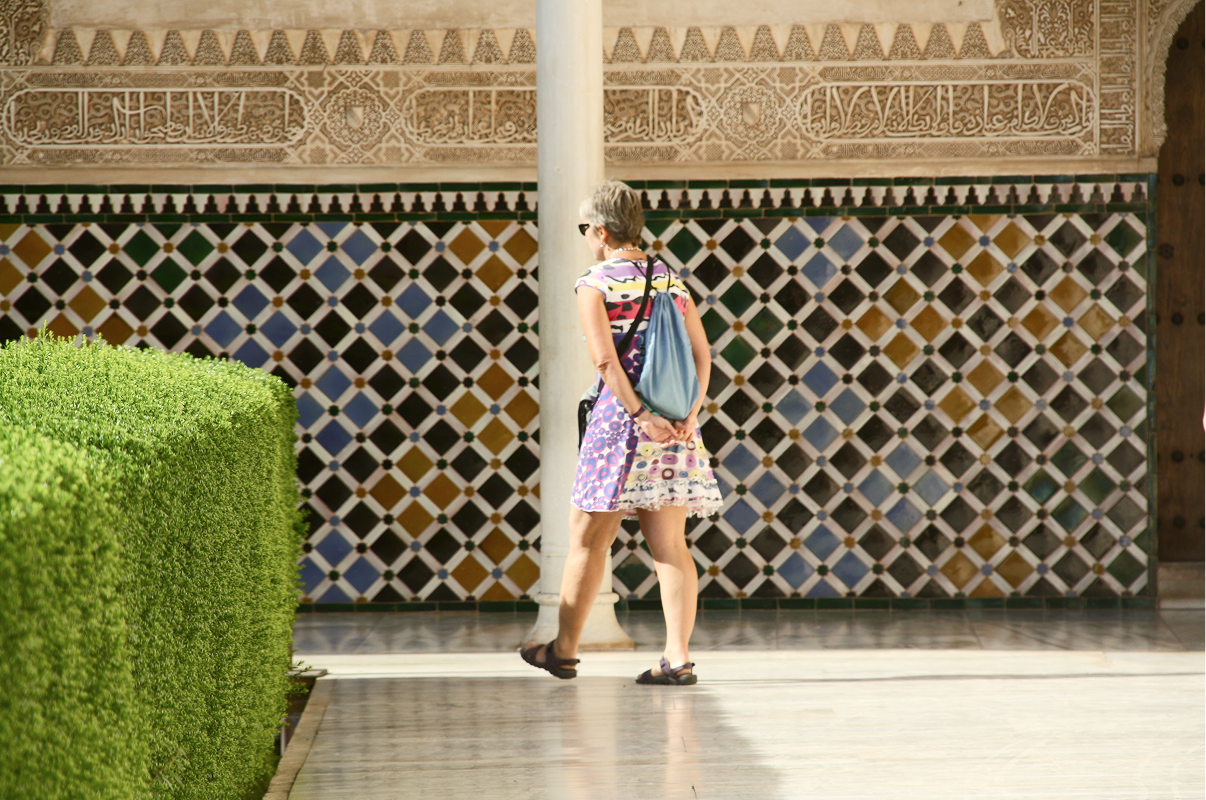
Monochrome glazed square tiles in a checked pattern dotted with popular 8-point star, Alhambra
The adaptability of the checked pattern makes it nearly ubiquitous around the world.
It looks grand in the Alhambra yet at home in the smallest nook in an English cottage. It covers expansive floors and makes a discreet kitchen backsplash. A checked pattern may cast an old-fashioned atmosphere in a space and yet, done in a gingham style, it becomes playful, even quirky.
It’s all in how you style it.
See our traditional Spanish tiles for more.
